
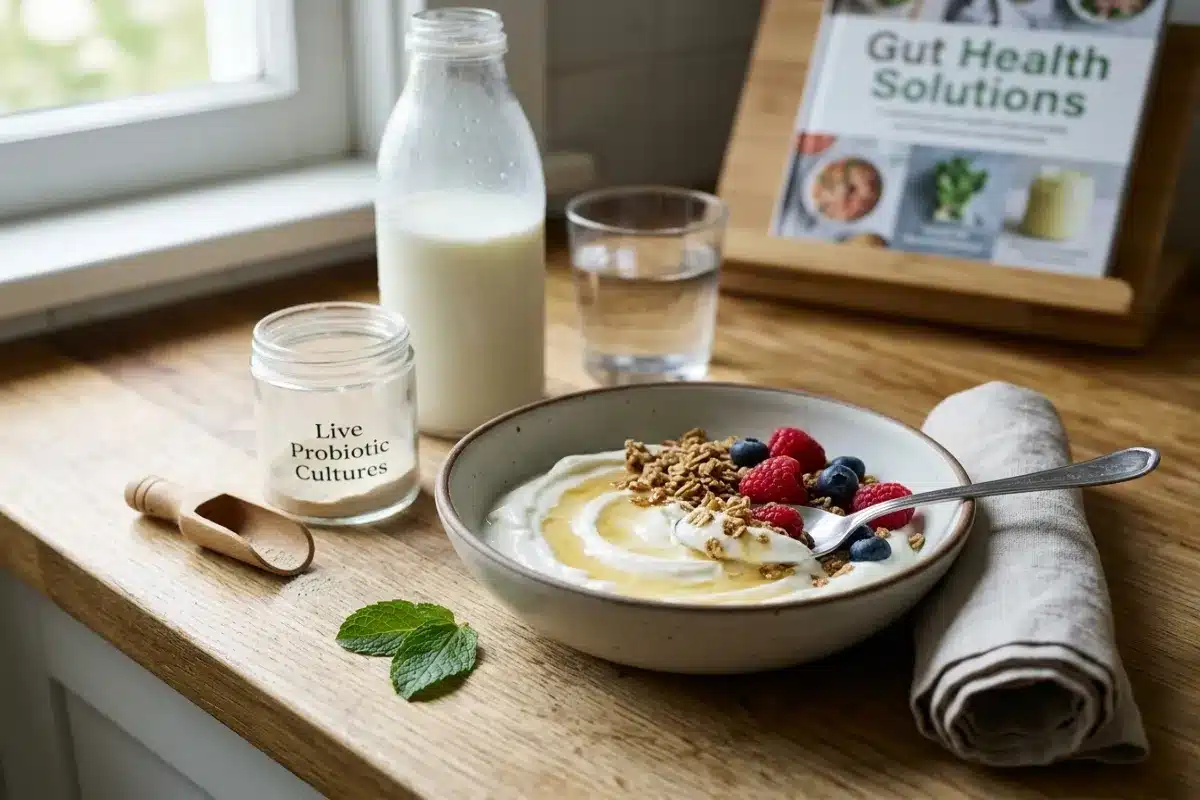
In the world of superfoods, few items are as scientifically backed as Yogurt with Live Cultures. Often referred to as “Probiotic Yogurt,” these creamy delights are more than just a breakfast staple—they are a living ecosystem of beneficial bacteria designed to support digestion, immunity, and overall wellness.
At inasrecipes.com, we believe that understanding your food is the first step to a healthier life. While almost all yogurt starts with bacteria, not all of it reaches your spoon with the “live” status intact. This guide will help you navigate the dairy aisle and show you how to ferment your own “liquid gold” at home.
Flourless Greek Yogurt Brownies – 9 Fudgy Secrets You Need

Table of Contents
What Exactly Are “Live Cultures”?
Live cultures are active strains of bacteria—most commonly Lactobacillus bulgaricus and Streptococcus thermophilus—that convert milk into yogurt through fermentation.
- The Benefit: These “good” bacteria help balance your microbiome, crowd out harmful pathogens, and assist in the breakdown of lactose.
- The Catch: Some commercial yogurts are heat-treated after fermentation, which kills these beneficial microbes. To get the health benefits, you must ensure they remain active.
Recipe: 2-Ingredient Homemade Yogurt with Live Cultures
Making your own yogurt is the only way to guarantee the highest concentration of probiotics without added thickeners or sugars.
Ingredients
- 1 Quart (1 Liter) Whole Milk: (High-quality pasteurized milk works best; avoid “Ultra-Pasteurized” if possible).
- 2 tbsp Plain Yogurt: This is your “starter.” It must be a brand that explicitly labels “Live and Active Cultures.”

Instructions
- Heat: Pour the milk into a heavy-bottomed pot. Heat slowly to 82°C (180°F) to kill any native bacteria and restructure the proteins.
- Cool: Let the milk cool until it reaches 43°C (110°F). It should feel warm but not hot to the touch.
- Inoculate: Remove ½ cup of the warm milk and whisk it into your 2 tbsp of starter yogurt. Pour that mixture back into the main pot and stir gently.
- Incubate: Keep the mixture warm (approx. 40°C) for 8 to 12 hours. You can use a dedicated yogurt maker, a slow cooker on “warm,” or an oven with only the light turned on.
- Set: Once thickened, refrigerate for at least 4 hours. This stops the fermentation and sets the texture.
Frequently Asked Questions (FAQ)
Which yogurts have live cultures?
Most major brands like Chobani, Fage, Siggi’s, and Stonyfield contain live and active cultures. However, the best way to be certain is to look for the “Live & Active Cultures” seal from the International Dairy Foods Association. This seal guarantees at least 100 million cultures per gram at the time of manufacture.
How do you know if your yogurt has live cultures?
Check the ingredient list. You should see the names of specific strains, such as L. Acidophilus, L. Casei, or Bifidobacterium. If the label says “heat-treated after culturing,” the bacteria are dead, and you will not receive the probiotic benefits. Real yogurt with live cultures will always be found in the refrigerated section, never on a room-temperature shelf.
What is the best yogurt for IBS sufferers?
For those with Irritable Bowel Syndrome (IBS), Low-FODMAP, Plain Greek Yogurt is usually best. The straining process of Greek yogurt removes much of the lactose (a sugar that triggers IBS symptoms). Strains like Bifidobacterium lactis have been specifically shown in studies to help improve gut transit time and reduce bloating.
What’s the best yogurt for diabetics?
Diabetics should prioritize Plain, Full-Fat or 2% Greek Yogurt. The high protein content in Greek yogurt helps slow the absorption of glucose, preventing blood sugar spikes. Avoid “fruit-on-the-bottom” or “light” yogurts, which are often packed with hidden sugars or artificial sweeteners that can affect insulin sensitivity.
The Ultimate Lemon Almond Yogurt Cake
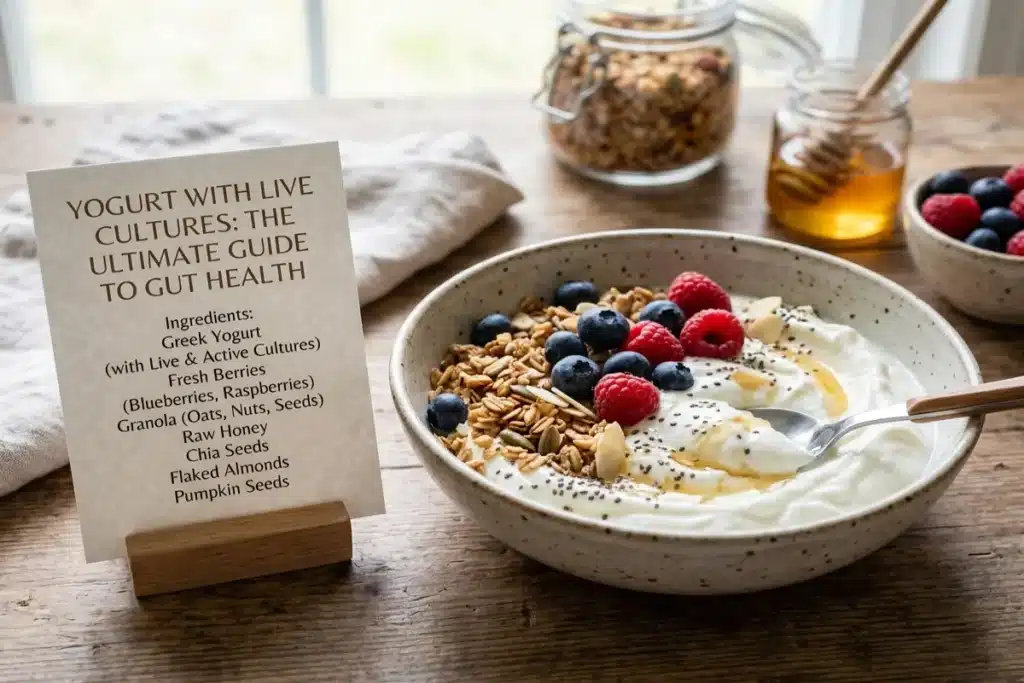
Pro-Tips for the Best Probiotic Experience
- Skip the Sugar: Sugar feeds bad bacteria in the gut, potentially neutralizing the benefits of the good bacteria in your yogurt. Sweeten with fresh fruit instead.
- Watch the Heat: Never stir yogurt into boiling hot oats or sauces, as temperatures above 55°C (130°F) will kill the live cultures.
- The Whey Factor: That watery liquid on top of your yogurt? That’s whey, and it’s packed with protein and probiotics. Don’t drain it—stir it back in!
Conclusion
Incorporating Yogurt with Live Cultures into your daily routine is one of the easiest ways to invest in your long-term health. Whether you choose a trusted store brand or try our simple 2-ingredient recipe, your gut will thank you for the microbial support.
Explore more fermented favorites and gut-healing recipes at inasrecipes.com!
Print
Yogurt with Live Cultures: The Ultimate Guide to Gut Health
- Total Time: 12 heures 30 minutes
- Yield: 1 quart 1x
- Diet: Vegetarian
Description
A simple and traditional method for making creamy homemade yogurt using just milk and live cultures, resulting in a rich and probiotic-packed dairy staple.
Ingredients
- 1 liter whole milk
- 2 tbsp plain yogurt (with live cultures)
Instructions
- Heat milk to 82°C.
- Cool milk to 43°C.
- Mix a portion of warm milk with yogurt starter.
- Stir mixture back into the pot.
- Keep warm for 8–12 hours.
- Refrigerate for at least 4 hours before serving.
Notes
Maintaining a stable warm temperature during incubation is key for thick and creamy yogurt.
- Prep Time: 10 minutes
- Cook Time: 20 minutes
- Category: Dairy
- Method: Fermentation
- Cuisine: Traditional
Nutrition
- Serving Size: 1/2 cup
- Calories: 80
- Sugar: 6g
- Sodium: 60mg
- Fat: 4g
- Saturated Fat: 2.5g
- Unsaturated Fat: 1g
- Trans Fat: 0g
- Carbohydrates: 6g
- Fiber: 0g
- Protein: 5g
- Cholesterol: 15mg