
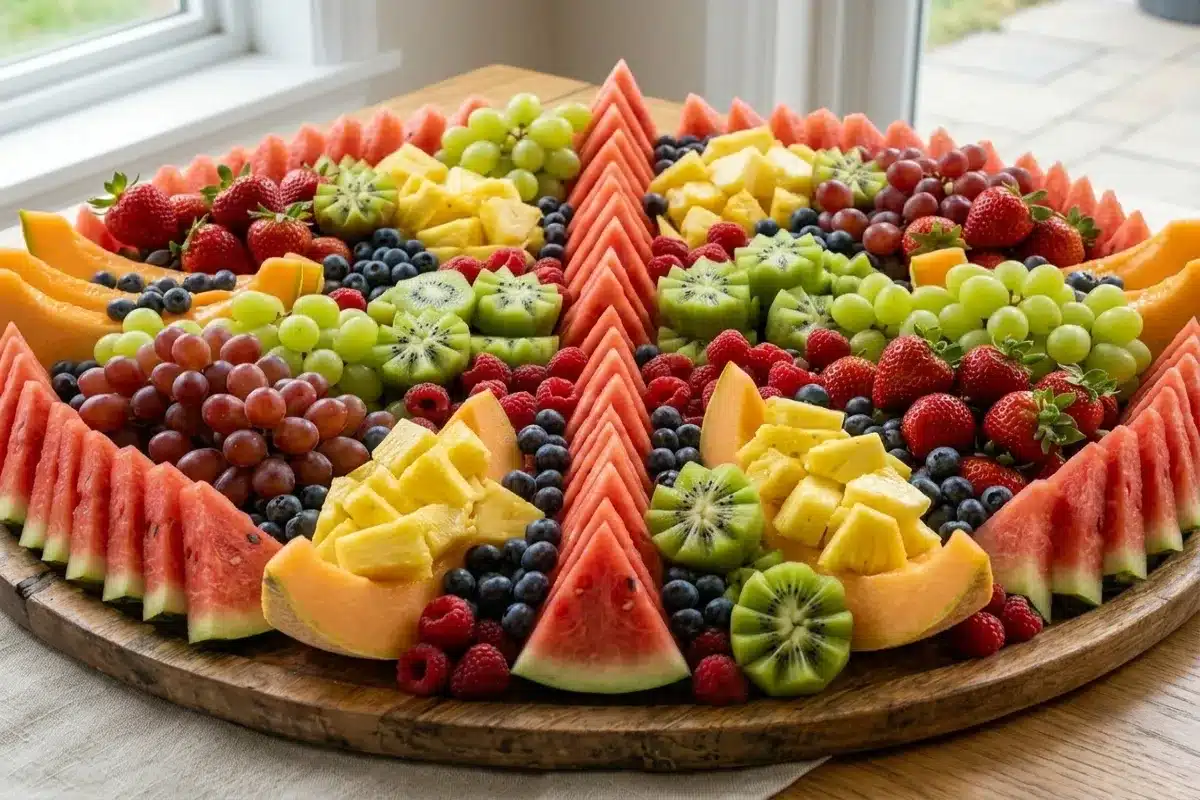
When you are hosting a morning brunch, a backyard barbecue, or a festive holiday party, a heavy baked dessert isn’t always what your guests want. If you are looking for an ultra-vibrant, refreshing, and universally loved centerpieces that requires absolutely zero stove time, a beautifully assembled Fruits Platter is your ultimate solution. It delivers a spectacular rainbow of natural sweetness, crisp textures, and hydrating flavors that instantly brightens up any party table.
At inasrecipes.com, we are all about high-reward kitchen strategies that maximize impact while minimizing your energy output. A common disappointment with homemade fruit trays is that certain items can quickly oxidize and turn a muddy brown, or release their juices and turn the entire display into a soggy, unappealing puddle. By understanding a few simple structural mapping laws and cellular barriers, you can ensure your fresh display stays perfectly crisp and pristine for hours.
Table of Contents
The Fruit Physics: Mapping an Eye-Catching, Long-Lasting Tray
Arranging a pristine raw fruit display relies on structural barrier placement, color contrasts, and moisture isolation:
- The Structural Melon Anchors: Dense, rind-on fruits like watermelon triangles, honeydew slices, or cantaloupe wedges act as the functional framework of your platter. Placing these heavy, firm items down first creates solid boundaries and structural “walls” that safely hold smaller, roll-away fruits like grapes and berries in place.
- The Cellular Moisture Shield: Soft, highly juicy fruits like sliced kiwi or cut citrus wheels release moisture rapidly once their skins are broken. To prevent their acidic juices from soaking into other fruits and making them mushy, always nestle these high-moisture items on top of a protective bed of whole, uncut berries or a layer of structural melon slices.
- The Oxidation Honey Block: Fruits like apples, pears, and bananas possess enzymes that turn dark brown the moment they hit the open air. Beyond standard lemon juice, dipping these slices into a light bath of two tablespoons of honey dissolved in one cup of warm water forms a natural microscopic shield that dramatically delays browning while keeping them beautifully glossy.
Recipe: The Ultimate Crowd-Pleasing Fresh Fruit Platter
Ingredients
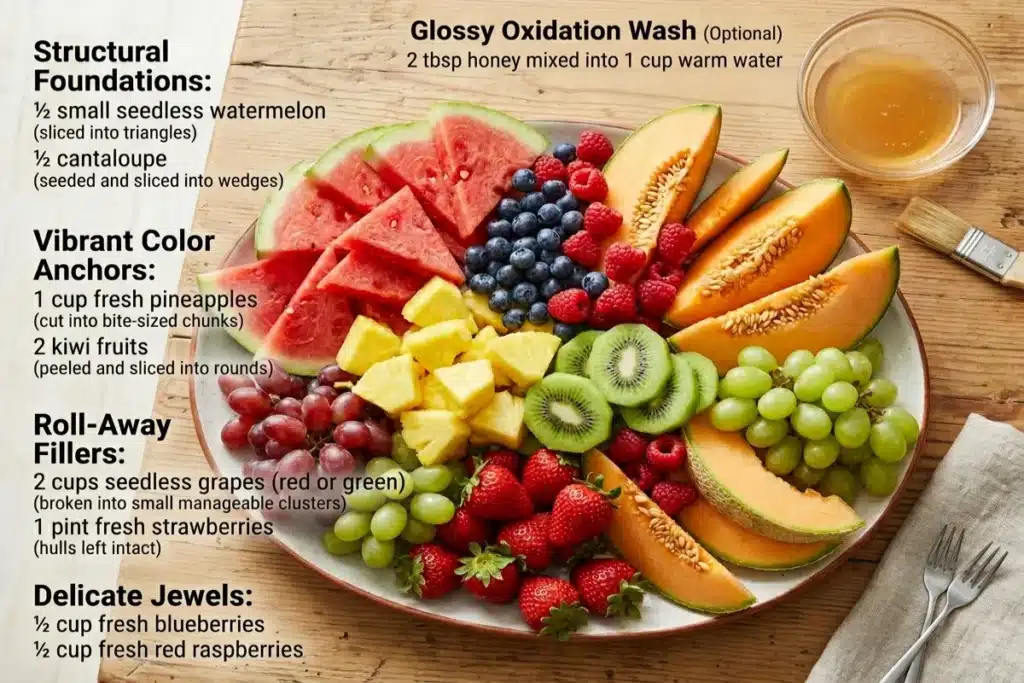
- The Structural Foundations: ½ small seedless watermelon (sliced into small triangles), and ½ cantaloupe or honeydew melon (seeded and sliced into wedges).
- The Vibrant Color Anchors: 1 cup fresh pineapples (cut into bite-sized chunks), and 2 kiwi fruits (peeled and sliced into rounds).
- The Roll-Away Fillers: 2 cups seedless red or green grapes (broken into small, manageable clusters), and 1 pint fresh strawberries (hulls left intact for structural handling).
- The Delicate Jewels: ½ cup fresh blueberries, and ½ cup fresh red raspberries.
- The Glossy Oxidation Wash (Optional): 2 tbsp honey mixed into 1 cup warm water (only if adding apple or pear slices).
Instructions
Step 1️⃣ – Wash, Prep, and Establish the Anchor Walls
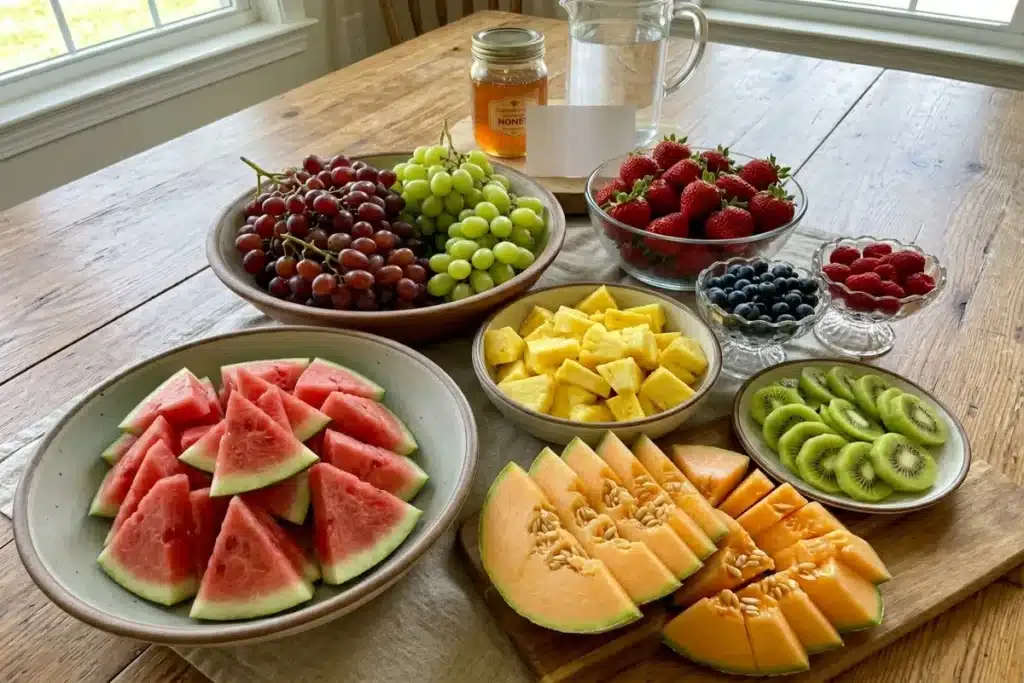
- The Prep Stage: Thoroughly wash and pat dry all your fresh fruit. Moisture is the ultimate enemy of a long-lasting platter, so make sure your berries and grapes are completely dry before building.
- Lay the Foundations: Grab a large serving board, a slate, or your biggest round plate. Arrange your firm watermelon and cantaloupe slices along the outer perimeter or down the exact center line of the board. These dense pieces establish the structural “fences” for your platter.
Step 2️⃣ – Cluster, Fill, and Scatter the Jewels
- Nestle the Clusters: Tuck your small bunches of grapes and whole strawberries snugly against the melon walls. Grouping them closely together keeps them looking abundant and prevents them from sliding around when the board is moved.
- Fill the Pockets: Pour your pineapple chunks and sliced kiwi rounds into the remaining empty pockets on the board, stacking them slightly high to create a beautiful, rich depth.
- Scatter the Jewels: Take your delicate blueberries and raspberries and drop them into any tiny gaps or seams between the larger fruits. These small berries act as natural fillers, making the entire display look lavish and professionally styled. Serve immediately cold, or cover loosely with plastic wrap and chill in the fridge for up to 2 hours!
Frequently Asked Questions (FAQ)
What is usually on a fruit platter?
A well-designed fruit platter typically features a diverse combination of dense melons (watermelon, cantaloupe), vibrant tropical elements (pineapple, kiwi), easily manageable cluster fruits (grapes, strawberries), and delicate accent berries (blueberries, raspberries). Including a wide spectrum of contrasting colors and textures ensures the display looks highly appealing to guests.
How do I make a fruit platter?
To make an exceptional fruit platter, you must wash and thoroughly dry all your produce, slice the firm melons into structural boundary pieces, arrange those heavy anchors on your board first, and then fill the interior gaps with grapes, sliced kiwi, and pineapples. Finish by scattering loose, small berries into any remaining empty pockets to create a lush look.
How many fruits are on a fruit platter?
For a beautifully balanced and visually striking presentation, aiming for between 5 and 7 distinct varieties of fruit is the ideal sweet spot. This provides enough color contrast (reds, greens, yellows, and purples) and textural variety to satisfy a large crowd without overcrowding the board or making the preparation process overwhelming.
Is it cheaper to buy a fruit platter or make one?
It is significantly cheaper to assemble a fruit platter yourself from scratch because pre-cut grocery store trays carry a massive labor markup, often costing double or triple the price per pound. Buying whole, seasonal fruits allows you to gain a much larger quantity of fresher, higher-quality produce for a fraction of the price.
Easy Fruit Tart Recipe, Dinner Party Dessert • Showstopping & Simple
Conclusion
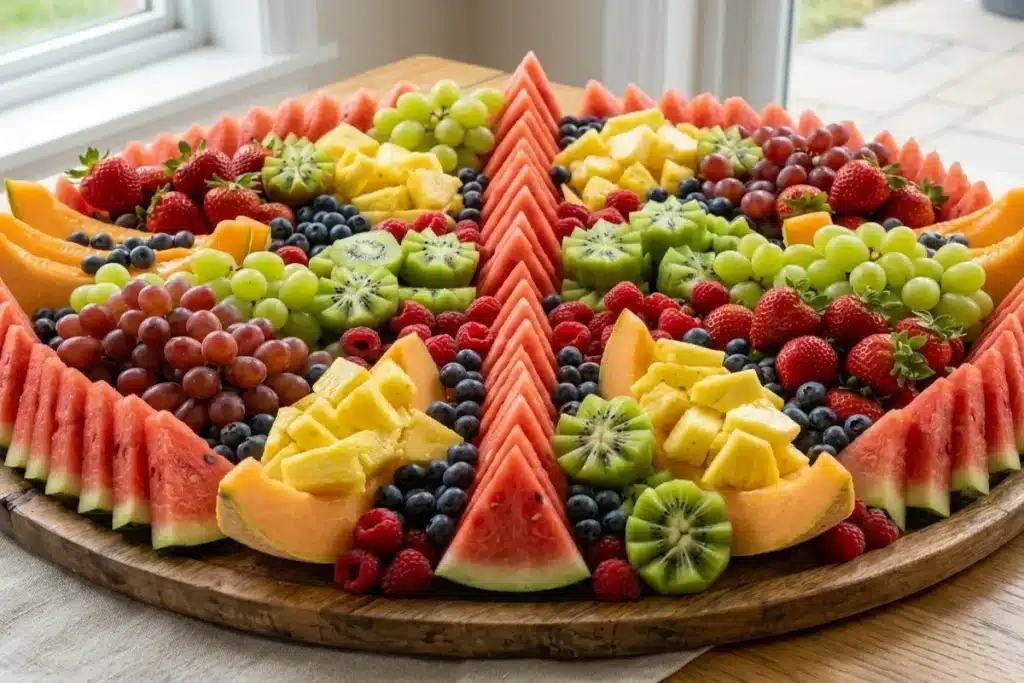
Our Ultimate Crowd-Pleasing Fresh Fruit Platter proves that creating a showstopping, gorgeous centerpiece does not require advanced culinary skills or hours over a hot stove. By drying your fruit completely to prevent sogginess, mapping out your heavy melon anchor walls first, and dropping in tiny berries as natural gap-fillers, you unlock an effortless, breathtaking dessert that will be the absolute star of the party.
For more no-cook entertaining masterclasses, quick weekend brunch ideas, and printable seasonal menus, visit us at inasrecipes.com!
Print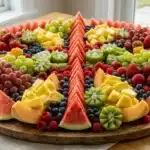
Fruits Platter • Easy Step-by-Step Guide
- Total Time: 20 minutes
- Yield: 10 servings 1x
- Diet: Vegetarian
Description
A colorful fresh fruit platter loaded with juicy watermelon, melon, pineapple, kiwi, grapes, strawberries, blueberries, and raspberries. Perfect for parties, brunches, holidays, and healthy entertaining.
Ingredients
- 1/2 small seedless watermelon, sliced into small triangles
- 1/2 cantaloupe or honeydew melon, seeded and sliced into wedges
- 1 cup fresh pineapple chunks
- 2 kiwi fruits, peeled and sliced into rounds
- 2 cups seedless red or green grapes, separated into small clusters
- 1 pint fresh strawberries, hulls intact
- 1/2 cup fresh blueberries
- 1/2 cup fresh red raspberries
- 2 tbsp honey mixed with 1 cup warm water (optional, for apples or pears)
Instructions
- Wash all fruit thoroughly and pat completely dry.
- Arrange the watermelon triangles and cantaloupe or honeydew wedges along the outer edges or center of a large serving board.
- Place small clusters of grapes and whole strawberries beside the melon slices to create structured sections.
- Fill remaining spaces with pineapple chunks and kiwi slices, stacking slightly for visual depth.
- Scatter the blueberries and raspberries into any gaps between larger fruits.
- If using apples or pears, brush or dip them in the optional honey-water mixture to help prevent browning.
- Serve immediately or cover loosely and refrigerate for up to 2 hours before serving.
Notes
Make sure all fruit is completely dry before assembling to keep the platter fresh and visually appealing. Assemble shortly before serving for the best texture and presentation.
- Prep Time: 20 minutes
- Cook Time: 0 minutes
- Category: Appetizer
- Method: No-Cook
- Cuisine: American
Nutrition
- Serving Size: 1 serving
- Calories: 110
- Sugar: 21g
- Sodium: 5mg
- Fat: 0g
- Saturated Fat: 0g
- Unsaturated Fat: 0g
- Trans Fat: 0g
- Carbohydrates: 28g
- Fiber: 3g
- Protein: 1g
- Cholesterol: 0mg