
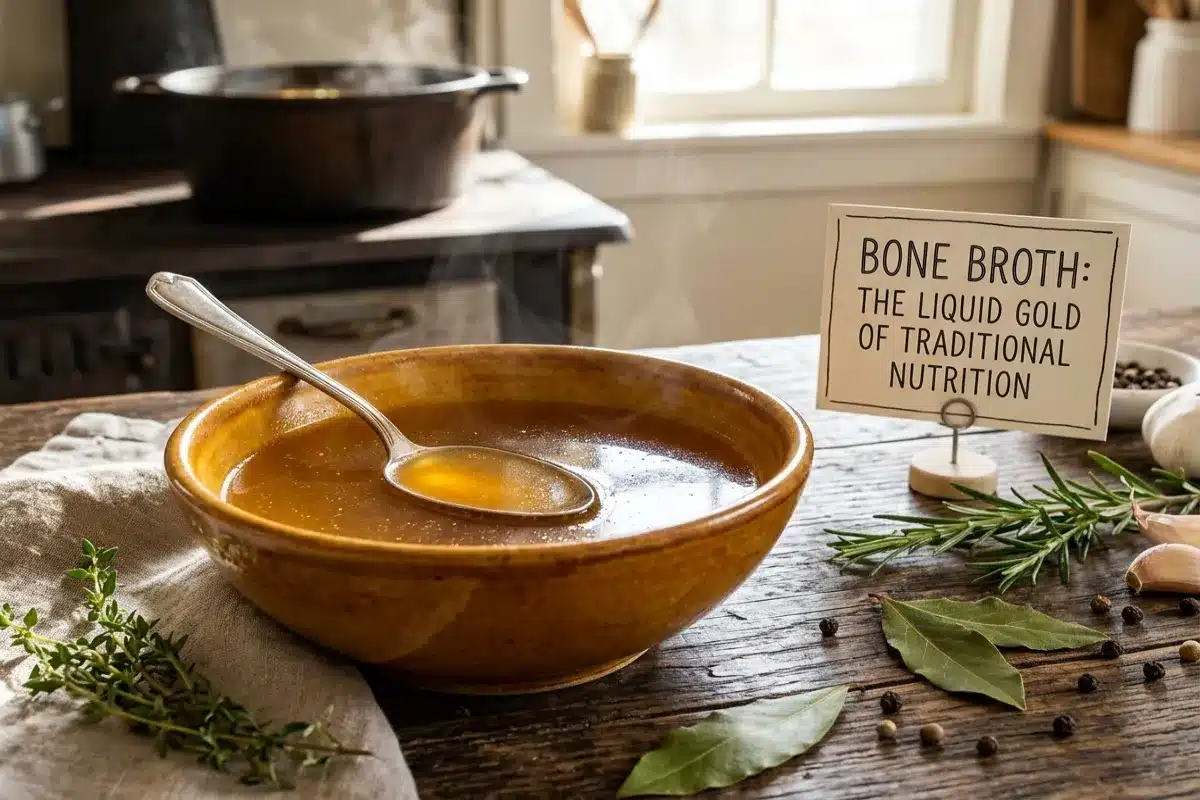
While stock and broth have been kitchen staples for centuries, Bone Broth has recently reclaimed its title as a nutritional powerhouse. Unlike standard broth, which is simmered for a few hours, true bone broth is a slow-cooked extraction that pulls minerals, amino acids, and collagen directly from the bones.
At inasrecipes.com, we believe that a great bone broth is the foundation of a healthy kitchen. Whether you sip it warm from a mug or use it as a base for gourmet sauces, this “liquid gold” is an essential tool for gut health and joint support.
Oatmeal Soup: The Savory Superfood You Need to Try
Table of Contents
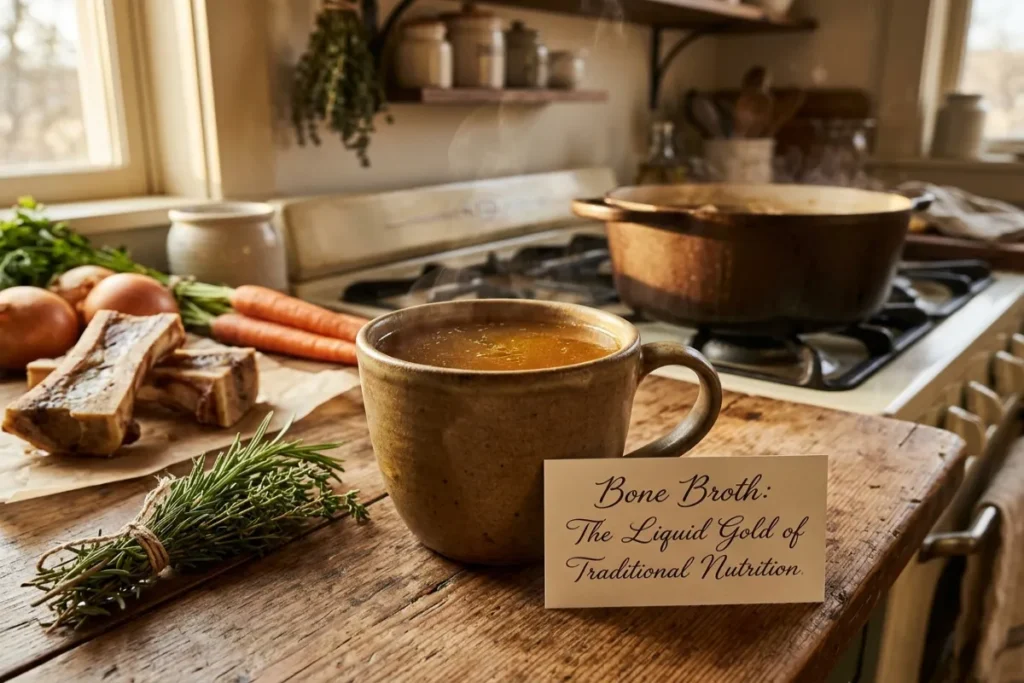
The Science of the “Gel”
The hallmark of a high-quality bone broth is its ability to “gel” when cooled.
- Collagen into Gelatin: Long simmering times break down the collagen in joints and connective tissue into gelatin.
- The Temperature: If your broth doesn’t wiggle like jelly when cold, it likely wasn’t simmered long enough or didn’t have enough “knuckle” or “feet” bones.
- The Acid: Adding a splash of apple cider vinegar helps pull the minerals (calcium and magnesium) out of the bone matrix.
Recipe: 24-Hour Slow Cooker Bone Broth
Ingredients
- 2-3 lbs Beef or Chicken Bones: (Include knuckles, marrow bones, or chicken feet for maximum gelatin).
- 2 tbsp Apple Cider Vinegar: Vital for mineral extraction.
- Vegetables: 1 onion, 2 carrots, 2 stalks celery (rough chopped).
- Aromatics: 2 bay leaves, 1 tsp peppercorns, and a bunch of fresh parsley (added in the last hour).
- Water: Enough to cover the bones by 2 inches.
Instructions
- Roast (Mandatory for Beef): Roast bones at 200°C for 30 minutes until browned. This improves the flavor and color significantly.
- Combine: Place roasted bones and any pan drippings into a slow cooker or large stockpot. Add vegetables, vinegar, and aromatics.
- Simmer: Cover with water. If using a slow cooker, set to “Low.” If using a stove, bring to a boil then reduce to the lowest simmer.
- Time: Cook chicken bones for 12–24 hours; beef bones for 24–48 hours.
- Strain: Remove the large bones and strain the liquid through a fine-mesh sieve.
- Cool: Chill immediately. Once cold, you can scrape off the hardened fat layer on top.

Frequently Asked Questions (FAQ)
How do I know if it’s good?
A “good” bone broth should be deeply colored and full-bodied. The ultimate test is the refrigerator test: if the broth turns into a semi-solid jelly when chilled, it is rich in gelatin and protein. If it remains liquid, it is still nutritious, but you may want to use more connective-tissue-rich bones (like joints) next time.
Can I reuse bones?
Yes, you can! This is known as a remouillage (French for “rewetting”). You can simmer the same set of bones for a second round. While the second batch will be lighter in color and flavor, it still contains valuable minerals. Many home cooks reuse bones until they become soft and crumble between the fingers.
What are the health benefits?
Bone broth is celebrated for several key reasons:
- Gut Health: The gelatin helps seal openings in the intestinal lining (helping with “leaky gut”).
- Joint Support: It provides glucosamine and chondroitin.
- Skin & Hair: It is a natural source of collagen, the building block for skin elasticity.
- Anti-Inflammatory: Contains amino acids like glycine and proline.
What are the risks?
The primary risk associated with bone broth is lead contamination. Bones can store small amounts of heavy metals. However, studies show that even in long-simmered broths, the levels remain well below the safety thresholds set by the EPA. Another risk is histamine intolerance; because bone broth is aged/slow-cooked, it can trigger symptoms in people sensitive to histamines.
How long does it last?
- Refrigerator: 4 to 5 days.
- Freezer: Up to 6 months. Pro Tip: Freeze your broth in silicone muffin tins or ice cube trays. Once frozen, pop them into a freezer bag for easy, pre-portioned servings.
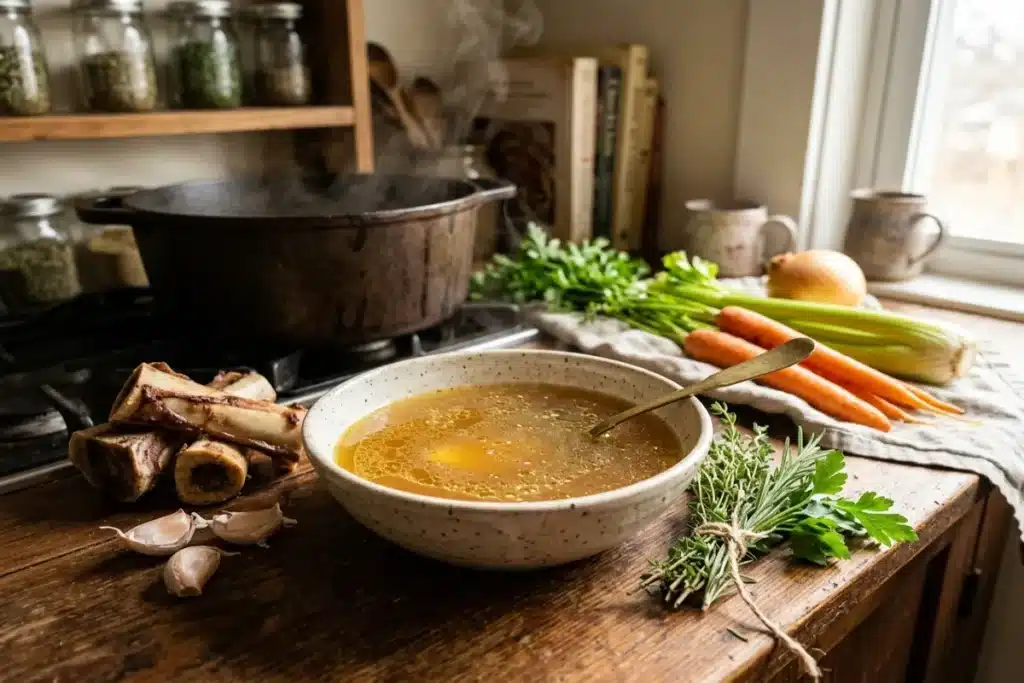
Conclusion
Making Bone Broth is a lesson in patience that pays off in flavor and vitality. It is the ultimate way to respect the whole animal while nourishing your body from the inside out.
For more traditional cooking tips and nutrient-dense recipes, visit us at inasrecipes.com!
Print
Bone Broth: The Liquid Gold of Traditional Nutrition
- Total Time: 24 heures 15 minutes
- Yield: 8 cups 1x
- Diet: Gluten Free
Description
A deeply nourishing and mineral-rich bone broth slow-cooked for maximum flavor and gelatin, perfect as a healing base for soups or sipping.
Ingredients
- 2–3 lbs beef or chicken bones
- 2 tbsp apple cider vinegar
- 1 onion
- 2 carrots
- 2 celery stalks
- 2 bay leaves
- 1 tsp peppercorns
- Fresh parsley
- Water
Instructions
- Roast bones at 200°C for 30 minutes (for beef).
- Place bones and drippings in slow cooker.
- Add vegetables, vinegar, and aromatics.
- Cover with water.
- Cook on low for 12–48 hours depending on bones.
- Strain broth through fine sieve.
- Cool and refrigerate.
- Remove hardened fat layer before use.
Notes
Adding vinegar helps extract minerals and collagen from the bones, resulting in a nutrient-dense broth.
- Prep Time: 15 minutes
- Cook Time: 24 heures
- Category: Broth
- Method: Slow Cooking
- Cuisine: Traditional
Nutrition
- Serving Size: 1 cup
- Calories: 50
- Sugar: 1g
- Sodium: 200mg
- Fat: 2g
- Saturated Fat: 0.5g
- Unsaturated Fat: 1g
- Trans Fat: 0g
- Carbohydrates: 2g
- Fiber: 0g
- Protein: 8g
- Cholesterol: 20mg