
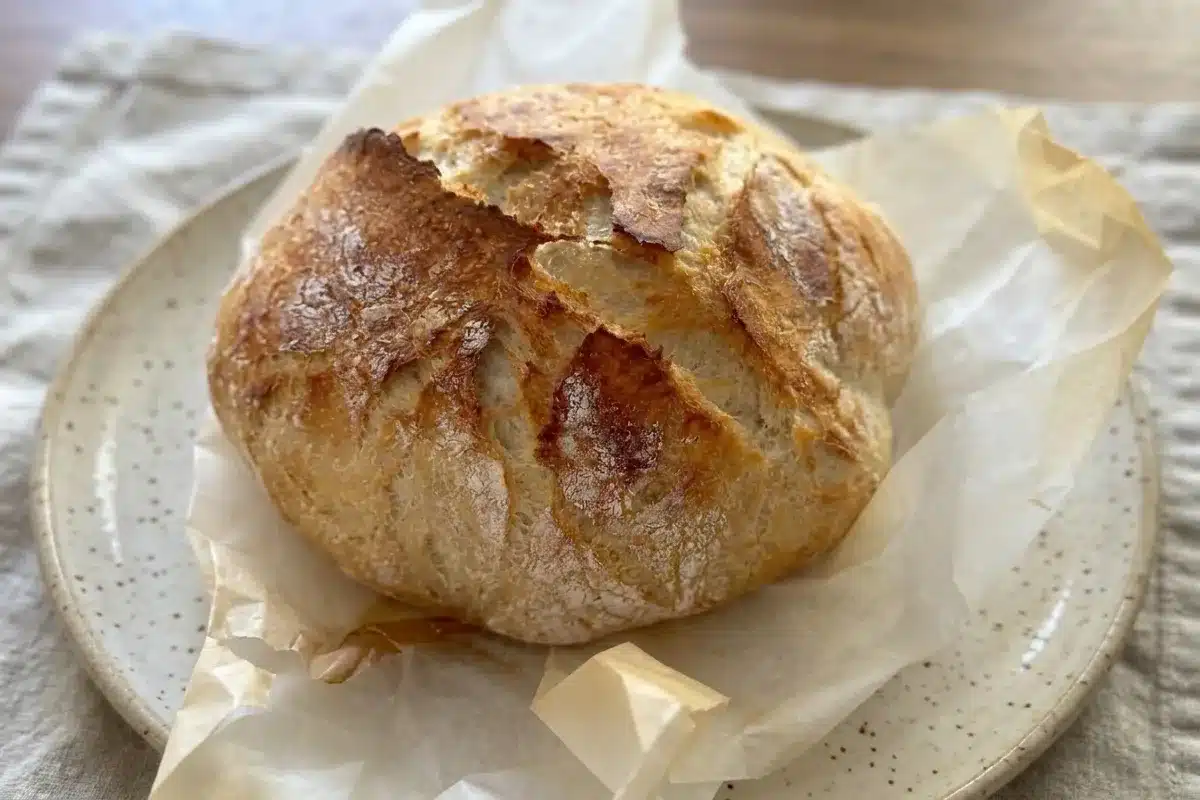
When the weekend arrives, a cozy morning is on the horizon, or you are simply searching for a deeply satisfying, comforting bake that yields a shatteringly crisp crust and an airy, tender interior, a flat, dense, or flavorless loaf of bread can feel like an absolute disappointment. If you want a bakery-quality loaf that delivers a rustic look, complex fermented flavor, and a perfect crumb without spending hours exhausting your arms kneading dough, mastering No Knead Overnight Artisan Bread is your ultimate kitchen milestone. It masterfully fuses a minimalist ingredient list with the passive power of time.
At inasrecipes.com, we love detailing the underlying food science that transforms simple home baking into repeatable, flawless triumphs. The most frequent disasters with homemade rustic bread are a dense, gummy interior that resembles a brick, or a pale, soft crust that lacks that signature artisanal crunch. By understanding the principles of enzymatic gluten alignment, long-term yeast fermentation, and steam retention using a heavy Dutch oven, you can bake a flawlessly golden, crackly loaf of bread every single time.
Toasted Bread with Cheese and Ham: The Ultimate Guide to the Perfect Crispy Toastie
Table of Contents
The Bread Science: Slow Fermentation and Steam Baking
Building a bakery-quality artisan loaf in a standard home oven relies entirely on letting time do the physical labor and manipulating heat-induced moisture:
- Enzymatic Gluten Self-Alignment: Traditional bread recipes require vigorous physical kneading to link glutenin and gliadin proteins into elastic gluten networks. In a no-knead recipe, we bypass this labor entirely. Over a 12-to-18-hour overnight resting window, natural enzymes in the flour break down proteins while slow-moving yeast bubbles gently stretch and align the gluten strands for us, creating a strong, airy dough matrix passively.
- Complex Flavor Synthesis via Cold/Slow Fermentation: Rapid-rise breads that bake in an hour taste primarily of commercial yeast. By stretching the fermentation window overnight, the yeast has time to digest complex sugars slowly. This metabolic process produces organic acids and ester compounds, yielding a deep, complex, slightly tangy flavor profile reminiscent of traditional sourdough.
- The Dutch Oven Steam Dome: Professional bakeries use specialized steam-injection ovens to keep the dough’s surface moist during the initial minutes of baking, allowing the bread to expand fully (oven spring) before the crust sets. A home cook can perfectly replicate this environment using a preheated, heavy cast-iron Dutch oven. Baking the dough with the lid on traps the moisture evaporating from the wet dough, creating a localized steam chamber that keeps the exterior soft during expansion and gelatinizes the surface starches for a shatteringly crisp, blistered crust.
Recipe: Masterclass No Knead Overnight Artisan Bread
Ingredients (Yields 1 Large Artisan Loaf)
The Minimalist Flour Matrix
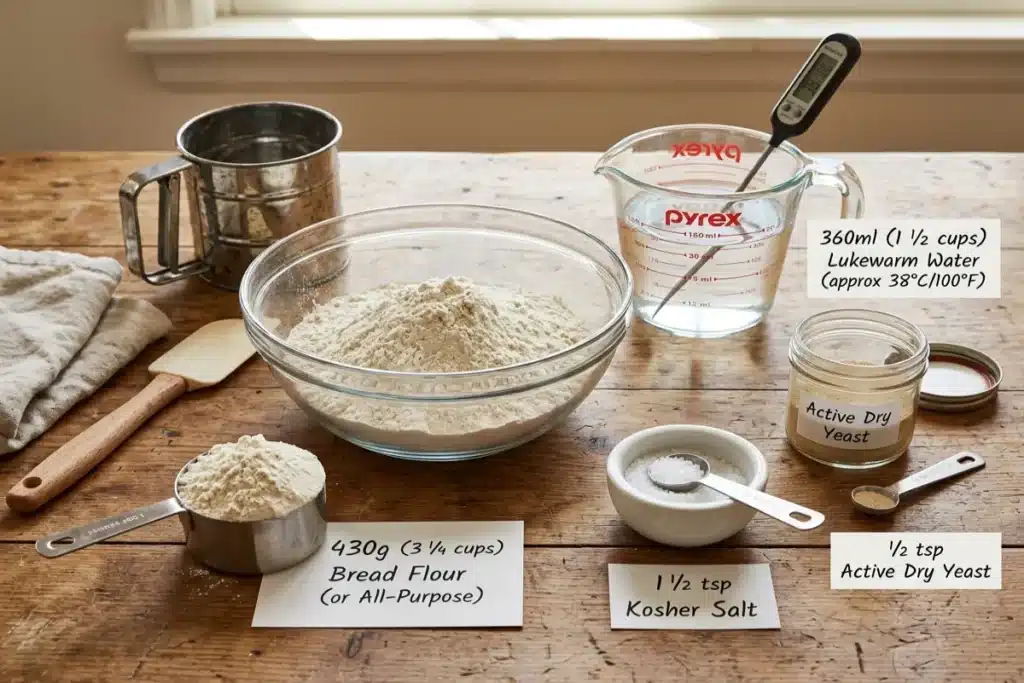
- 430g (3 1/4 cups) all-purpose flour or unbleached bread flour (bread flour yields a chewier crumb)
- 1 1/2 tsp kosher salt (fine sea salt works perfectly too)
- 1/2 tsp active dry yeast or instant yeast
The Hydration Agent
- 360ml (1 1/2 cups) lukewarm water (approx. 38°C / 100°F to gently wake up the yeast)
Instructions
1.The Shaggy Dough Integration:5 min.
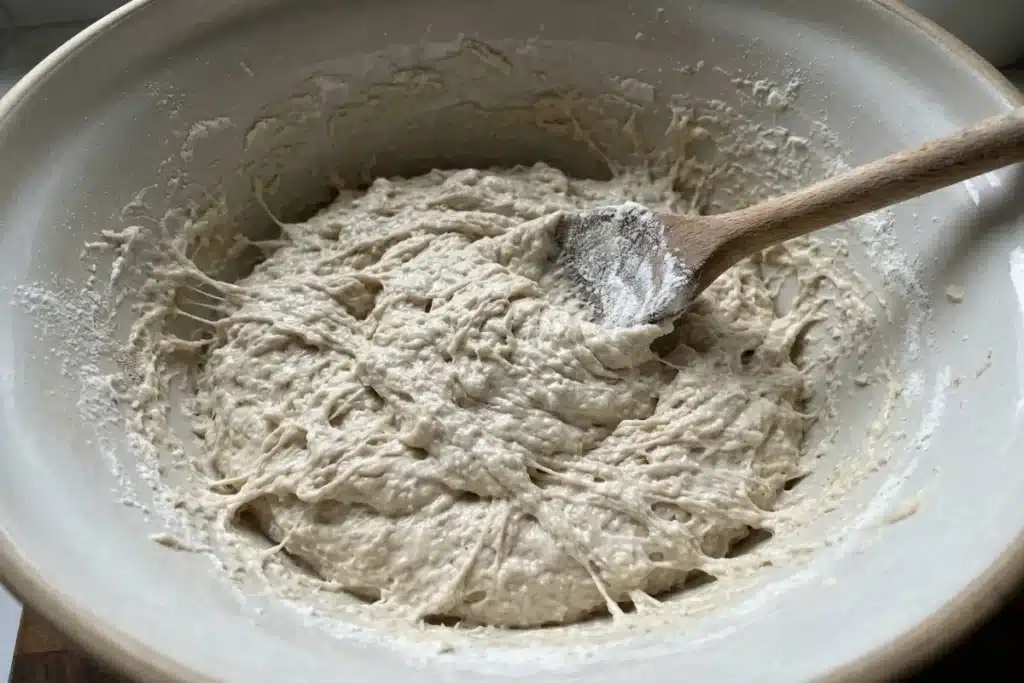
In a large mixing bowl, whisk together the flour, kosher salt, and yeast until thoroughly combined. Pour the lukewarm water into the center of the dry ingredients. Using the handle of a wooden spoon or a spatula, stir the mixture gently until a wet, sticky, shaggy dough forms and no dry flour patches remain. Do not overmix or attempt to knead it.
2.The Overnight Passive Fermentation:12-18 hours.
Cover the bowl tightly with plastic wrap or a damp kitchen towel to trap the humidity. Place the bowl in a warm, draft-free spot in your kitchen. Let the dough rest undisturbed overnight for 12 to 18 hours. During this long sleep, the dough will more than double in size, become highly bubbly, and develop a sweet, yeasty aroma.
3.The Preheating and Shaping Protocol:45 min.
Place a heavy 4-to-6-quart Dutch oven (with its lid on) into your oven and preheat to 230°C (450°F). While the oven heats, scrape the sticky dough onto a generously floured sheet of parchment paper. Dust your hands with flour and gently fold the edges of the dough inward to form a round ball. Cover the dough loosely with a clean towel and let it rest for 30 minutes while the Dutch oven gets scorching hot.
4.The High-Heat Steam Bake and Crisping Finish:45 min.
Using oven mitts, carefully remove the hot Dutch oven from your oven and lift the lid. Lift the dough by grasping the edges of the parchment paper and lower it directly into the hot pot. Cover with the lid and bake for 30 minutes to trap the steam. Carefully remove the lid and bake uncovered for an additional 15 minutes until the crust is a deep, blistered, golden brown. Let the loaf cool on a wire rack for 1 hour before slicing!
Frequently Asked Questions (FAQ)
Can you leave no-knead bread to rise overnight?
Yes, leaving the dough to rise overnight (ideally 12 to 18 hours at room temperature) is actually the primary engine of the entire no-knead method. This extended fermentation window replaces physical kneading by allowing natural enzymes and slow yeast activity to build the gluten structure passively.
What are some tips for making better no-knead bread?
To elevate your bread, always bake the dough inside a heavily preheated cast-iron Dutch oven to trap steam, use a high-protein bread flour for a sturdier rise, weigh your ingredients with a digital kitchen scale, and resist the urge to slice the hot loaf immediately so the internal starches can set without turning gummy.
Why is artisan bread no-knead?
Traditional artisan bread is often no-knead because it prioritizes long, slow fermentation over mechanical manipulation. Allowing the wet dough to sit over many hours naturally aligns the gluten networks, which produces a much more open, rustic crumb structure and a richer flavor than rapid-kneaded doughs can achieve.
How to make overnight artisan bread?
You make overnight artisan bread by mixing flour, yeast, salt, and water into a wet, shaggy dough, letting it ferment covered at room temperature for 12 to 18 hours, shaping it into a round loaf on parchment paper, and baking it inside a preheated 230°C (450°F) Dutch oven—first covered for 30 minutes, then uncovered for 15 minutes.
Conclusion
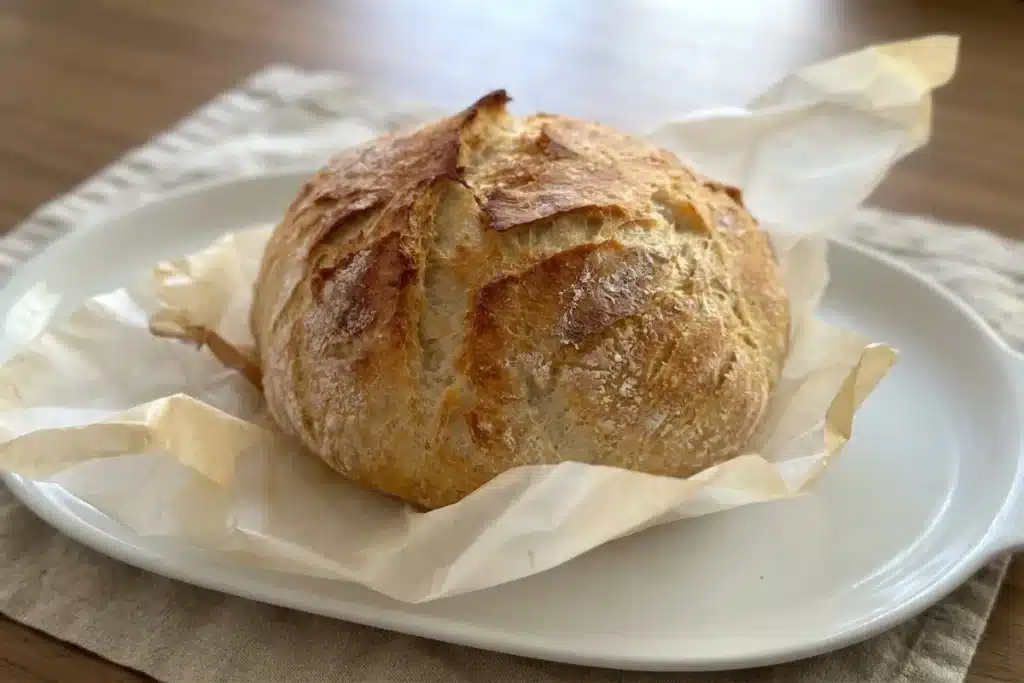
The spectacular, crackling-crisp crust and tender, airy interior of our No Knead Overnight Artisan Bread prove that elite, bakery-level loaves are completely achievable at home when you respect the science of slow fermentation. By allowing time to naturally weave your gluten networks and utilizing a covered Dutch oven to trap hot steam, you build a magnificent, savory masterpiece that redefines home baking.
For more small-batch baking blueprints, flour hydration guides, and printable recipe scaling matrices, come join our community at inasrecipes.com!
Print
No Knead Overnight Artisan Bread
- Total Time: 13 hours 5 minutes
- Yield: 1 loaf 1x
- Diet: Vegetarian
Description
This no knead overnight artisan bread delivers a crisp, golden crust and a soft, airy crumb with minimal effort. A long fermentation develops incredible flavor, making it perfect for sandwiches, soups, or simply serving with butter.
Ingredients
- 430g all-purpose flour or unbleached bread flour
- 1 1/2 tsp kosher salt
- 1/2 tsp active dry yeast or instant yeast
- 360ml lukewarm water
Instructions
- In a large bowl, whisk together the flour, salt, and yeast. Pour in the lukewarm water and stir until a wet, shaggy dough forms with no dry flour remaining. Do not knead.
- Cover the bowl tightly with plastic wrap or a damp kitchen towel and let the dough rest at room temperature for 12 to 18 hours until doubled in size and bubbly.
- Place a Dutch oven with its lid into the oven and preheat to 230°C (450°F). Turn the dough onto a generously floured sheet of parchment paper, gently shape it into a round loaf, and let it rest for 30 minutes.
- Carefully lower the dough into the hot Dutch oven using the parchment paper. Cover with the lid and bake for 30 minutes.
- Remove the lid and continue baking for 15 minutes until the crust is deep golden brown and crisp.
- Transfer the bread to a wire rack and allow it to cool completely before slicing.
Notes
The long overnight fermentation creates outstanding flavor and an airy crumb without kneading. Always allow the loaf to cool completely before slicing to preserve its texture.
- Prep Time: 20 minutes
- Cook Time: 45 minutes
- Category: Bread
- Method: Baked
- Cuisine: Artisan
Nutrition
- Serving Size: 1 slice
- Calories: 160
- Sugar: 0g
- Sodium: 220mg
- Fat: 1g
- Saturated Fat: 0g
- Unsaturated Fat: 0g
- Trans Fat: 0g
- Carbohydrates: 33g
- Fiber: 1g
- Protein: 5g
- Cholesterol: 0mg