
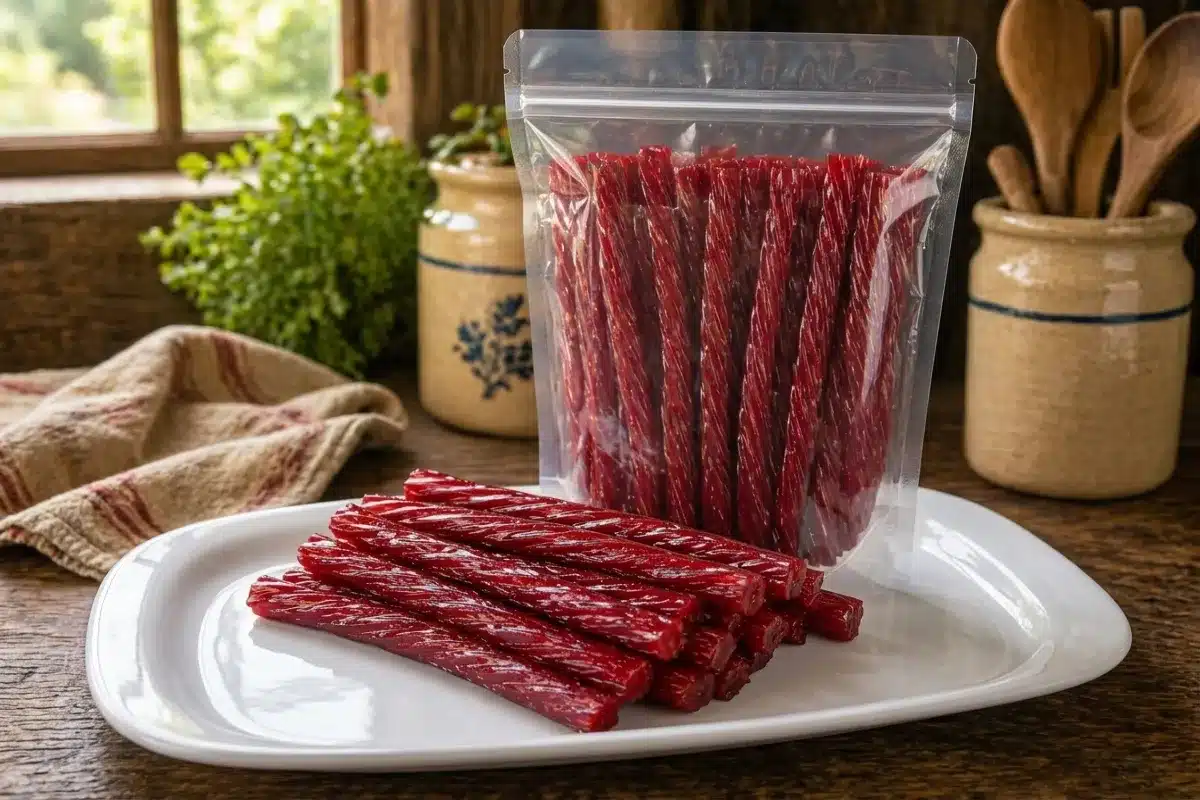
When you step into a modern candy aisle, you are instantly bombarded by mass-produced sweets packed with artificial preservatives, high-fructose corn syrup, and synthetic wax coatings that leave a plasticky residue on your palate. If you are searching for a rich, deeply nostalgic confection that honors the meticulous, small-batch traditions of the past, opening a bag of Millstone Acres Amish Style Wild Cherry Licorice, Handmade Chewy Candy, Old Fashioned Treat is your ultimate breakthrough. This exceptional delicacy rejects industrial shortcuts, delivering a thick, pillowy, and intensely fruity chew that captures the pure essence of rustic heritage confections.
At inasrecipes.com, we love peeling back the layers on legacy culinary crafts to understand the physical chemistry that makes artisan food so superior. The biggest disappointment with commercial “red licorice” twists is an aggressively rubbery, wax-like texture that tears rather than yields smoothly to a bite. By exploring the laws of low-shear wheat starch gelatinization, slow atmospheric curing, and balanced fruit ester binding, you can see exactly why this handmade Amish-style treat operates in an entirely elite class of its own.
Millstone Acres Amish Style Cherry Pie
Table of Contents
The Candy Chemistry: Starch Gelatinization and Retrogradation Dynamics
Achieving the dense, satisfying, and ultra-tender bite of an authentic Amish-style licorice relies entirely on managing starch molecules and thermal processing boundaries:
- The Low-Shear Starch Gelatinization: Unlike hard candies which rely on boiling sugar to the hard-crack stage, licorice is structurally built on a foundation of wheat flour and starches. When mixed with liquid sugar and heated slowly, the starch granules absorb water, swell, and burst open (gelatinization). Processing this mix in small, low-shear open kettles prevents the delicate carbohydrate chains from breaking apart, giving the candy its unique, substantial body.
- The Atmospheric Retrogradation Curing Phase: Industrial candy factories use high-speed extrusion lines that instantly flash-cool candy ropes using artificial fans, which traps moisture and creates a tough, rubbery skin. Traditional handmade licorice is slowly extruded and left to age in temperature-controlled curing rooms for up to 24 hours. This slow cooling allows the starch molecules to re-align naturally (retrogradation), locking in a consistently tender, velvety bite from the outer edge to the very core.
- Volatile Wild Cherry Ester Binding: Fruit flavors are incredibly volatile and easily evaporate when exposed to high temperatures. By folding the natural wild cherry oils and extracts into the dense starch matrix after it has finished its high-heat cook cycle, the gelatinized starch network physically encapsulates the flavor compounds. This keeps the fruity taste vibrant and long-lasting on your palate.
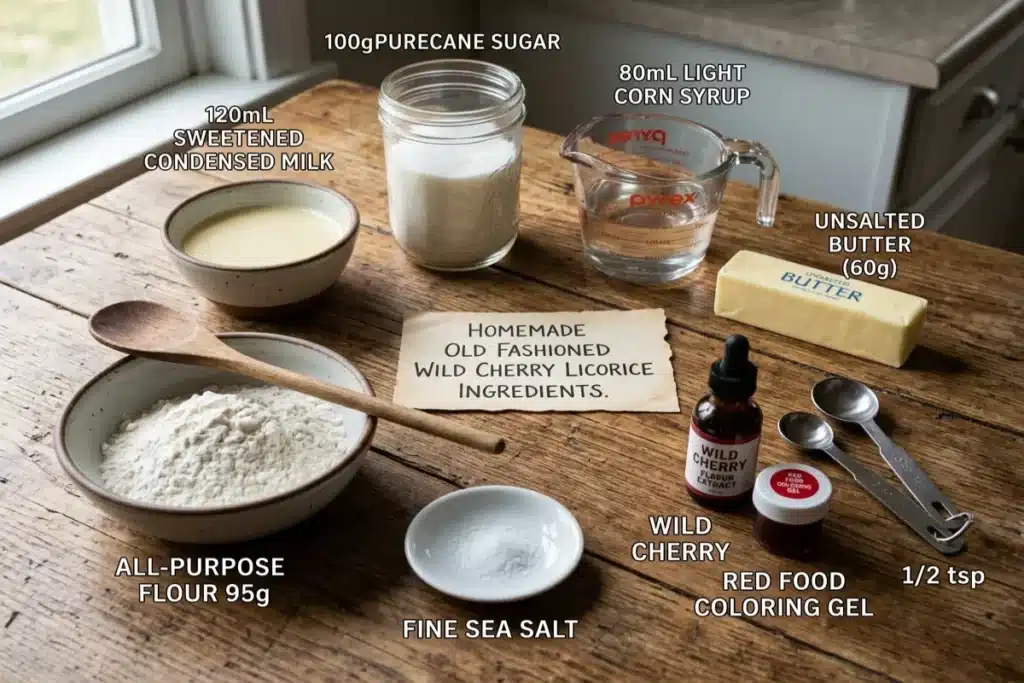
Homemade Old Fashioned Wild Cherry Licorice
Most people don’t realize that authentic licorice is closer to a cooked, structured dough than a standard melted sugar candy. To achieve the perfect chewy texture without using industrial high-pressure extruders, this recipe uses wheat flour as the structural anchor. By controlling the heat and letting the starch matrix rest, you will trigger natural starch alignment to get that signature premium bite.
Ingredients
The Sweet Soluble Base
- 120ml sweetened condensed milk (provides lipids and proteins for smoothness)
- 100g pure cane sugar
- 80ml light corn syrup (prevents grainy sugar crystallization)
- 60g unsalted butter
The Structural Matrix
- 95g all-purpose flour (the starch foundation)
- A tiny pinch of fine sea salt
The Volatile Aromatics
- 1.5 tsp high-quality wild cherry flavor extract
- 1/2 tsp natural red food coloring gel
Instructions
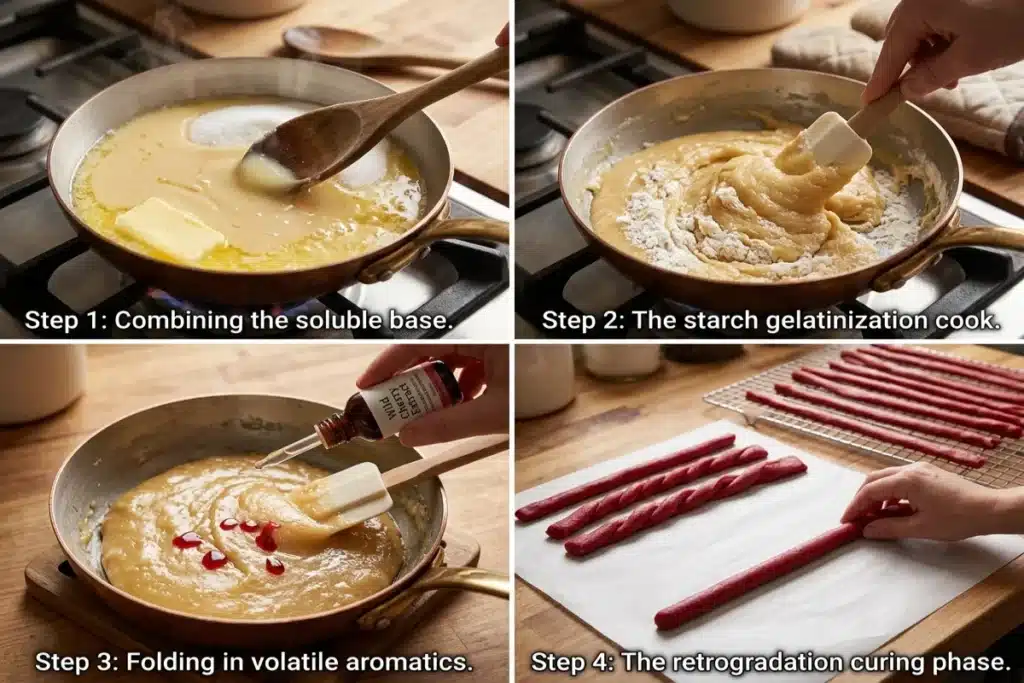
1.Combine and Melt the Soluble Base:5 min.
In a heavy-bottomed saucepan or small copper skillet, combine the sweetened condensed milk, cane sugar, light corn syrup, and unsalted butter. Place over medium heat and stir continuously until the butter is completely melted and the sugar crystals have entirely dissolved into a smooth, uniform golden liquid.
2.The Starch Gelatinization Cook:10-12 min.
Turn the heat down to medium-low. Add the salt and sift in the all-purpose flour all at once. Stir vigorously with a heatproof silicone spatula or wooden spoon. The mixture will immediately clump up into a thick, sticky dough. Keep cooking and folding the dough over itself continuously for 10 to 12 minutes. This heat cooks out the raw flour taste and forces the starch molecules to swell and hydrate (gelatinize).
3.Fold in the Volatile Aromatics:2 min.
Remove the saucepan entirely from the heat source. Let the thick dough cool for 60 seconds so the intense heat doesn’t instantly evaporate your flavors. Pour in the wild cherry extract and the red gel coloring. Work the dough thoroughly with your spatula until the color is entirely uniform and the cherry oil is completely locked into the starch matrix.
4.The Retrogradation Curing Phase:24 hours.
Turn the warm dough out onto a sheet of parchment paper. Once it is cool enough to handle safely with your hands, roll the dough into long, 1/2-inch thick ropes (you can twist them for a classic look if you like!). Place the ropes on a wire rack and leave them out completely undisturbed at cool room temperature for 12 to 24 hours. This slow air-cure allows the starches to re-align and firm up (retrogradation), giving the candy its perfect, signature old-fashioned chew.
Chef’s Science Note: If you try to eat the licorice immediately after rolling, it will feel too soft and slightly sticky. Don’t panic! The magic happens during that 24-hour room temperature rest. As the moisture balances out and the starch starch network locks together, it transforms into a clean, snappable, premium candy. Once cured, cut into bite-sized pieces and store in an airtight container!
Frequently Asked Questions (FAQ)
What is the oldest licorice candy?
The oldest commercial brand of licorice candy still in active production today is Bassetti’s Liquorice Allsorts (originally manufactured by Geo. Bassett & Co. in Sheffield, England, back in 1899). However, pure medicinal licorice root paste has been utilized as a therapeutic and confectionery element across ancient Egypt, Greece, and China for thousands of years.
What is the unhealthiest candy ever?
While health metrics vary based on portion sizes, food historians and nutritionists often point to pure sugar-and-wax novelties (like liquid-filled wax bottles or sugary marshmallow treats packed with high concentrations of artificial Red Dye 40, Blue 1, and trans fats) as the least nutritional candies ever made. Artisan licorice, by comparison, avoids these heavy wax bases.
Which country eats the most liquorice?
The undisputed global champion of liquorice consumption is the Netherlands, where the average citizen consumes roughly 2 kilograms (around 4.4 pounds) of liquorice per year. The Dutch are globally famous for their deep love of drop—a distinct style of licorice infused with ammonium chloride for a intensely salty flavor profile.
What is the #1 selling candy in the world?
Globally, Snickers (manufactured by Mars, Incorporated) consistently ranks as the number one selling candy bar in the world, generating over 2 billion dollars in annual revenue. In the non-chocolate and chewy confectionery category, products like Haribo Goldbears and classic red licorice twists dominate the global market shares.
How much licorice is safe?
For genuine black licorice containing natural root extract, the FDA notes that eating 57 grams (2 ounces) a day for two weeks can cause irregular heart rhythms due to glycyrrhizin, a compound that temporarily drops potassium levels. However, red or wild cherry licorice is completely safe to enjoy in any standard snack portion because it uses fruit flavor extracts rather than the black licorice herb.
Which country makes the best licorice?
Confectionery experts routinely state that the Netherlands, Finland, and Australia make the world’s best licorice. Australia is celebrated for creating incredibly soft, fruit-forward red licorice varieties, while the Nordic countries are globally unmatched in perfecting complex, artisan black and salted liquorice profiles.
Conclusion
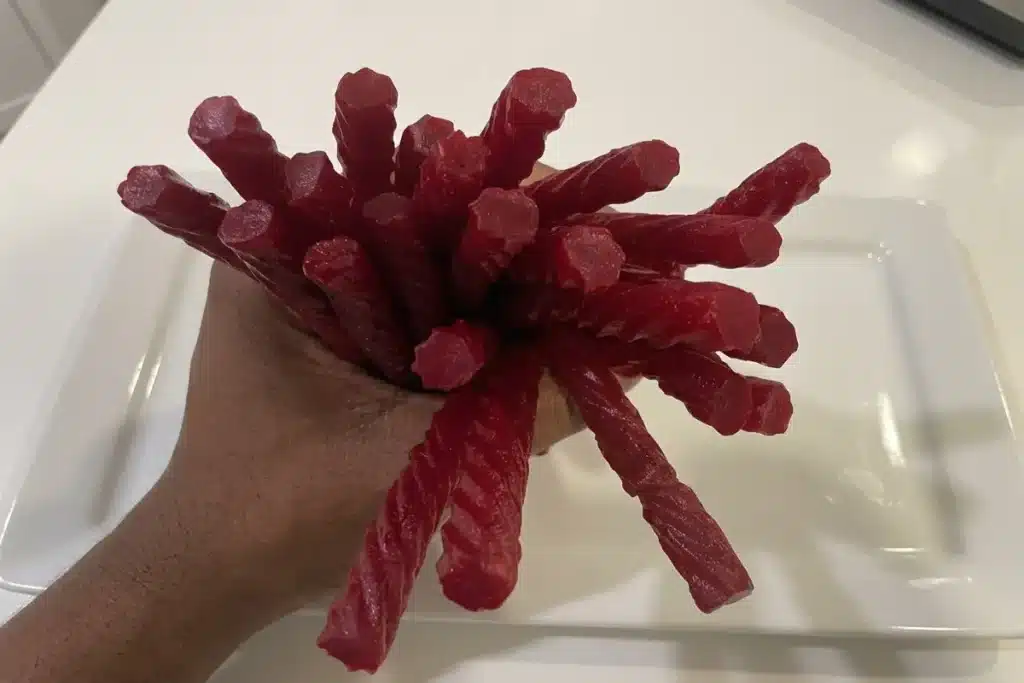
The unforgettable profile of Millstone Acres Amish Style Wild Cherry Licorice proves that old-school confectionery techniques yield an incomparably superior snack. By allowing the wheat starches to cook slowly in traditional open kettles and undergo a gentle 24-hour atmospheric cure, this handmade treat completely bypasses the rubbery, waxy limitations of industrial factories to deliver an uncompromised burst of nostalgia.
For more deep-dives into artisan confectionery heritage, small-batch canning recipes, and step-by-step baking guides, come explore our world at inasrecipes.com!
Print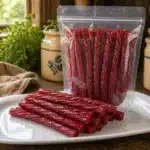
Millstone Acres Amish Style Wild Cherry Licorice, Handmade Chewy Candy, Old Fashioned Treat
- Total Time: 24 hours 32 minutes
- Yield: 20 pieces 1x
- Diet: Vegetarian
Description
This Homemade Old Fashioned Wild Cherry Licorice is crafted using a traditional cooked dough method for an authentic chewy texture. Sweetened condensed milk, flour, butter, and wild cherry flavor combine to create a nostalgic homemade candy with the perfect old-fashioned bite.
Ingredients
- 120ml sweetened condensed milk
- 100g pure cane sugar
- 80ml light corn syrup
- 60g unsalted butter
- 95g all-purpose flour
- A pinch of fine sea salt
- 1.5 tsp wild cherry flavor extract
- 1/2 tsp natural red food coloring gel
Instructions
- Combine the sweetened condensed milk, cane sugar, corn syrup, and butter in a heavy-bottomed saucepan.
- Heat over medium heat, stirring continuously until the butter melts and the sugar dissolves completely.
- Reduce the heat to medium-low.
- Add the salt and sift in the flour.
- Stir continuously until a thick dough forms.
- Continue cooking and folding the dough for 10 to 12 minutes to fully cook the flour.
- Remove the pan from the heat and allow the dough to cool for about 1 minute.
- Stir in the wild cherry extract and red food coloring until evenly combined.
- Transfer the warm dough onto parchment paper.
- Once cool enough to handle, roll into 1/2-inch thick ropes and twist if desired.
- Place the ropes on a wire rack.
- Allow them to air cure at cool room temperature for 12 to 24 hours.
- Cut into bite-sized pieces and store in an airtight container.
Notes
Cooking the flour thoroughly is essential for eliminating any raw taste while creating the signature chewy texture. Allowing the licorice to air cure overnight develops the classic old-fashioned consistency.
- Prep Time: 15 minutes
- Cook Time: 17 minutes
- Category: Dessert
- Method: Candy Making
- Cuisine: American
Nutrition
- Serving Size: 1 piece
- Calories: 95
- Sugar: 13g
- Sodium: 20mg
- Fat: 2g
- Saturated Fat: 1.5g
- Unsaturated Fat: 0.5g
- Trans Fat: 0g
- Carbohydrates: 18g
- Fiber: 0g
- Protein: 1g
- Cholesterol: 6mg