
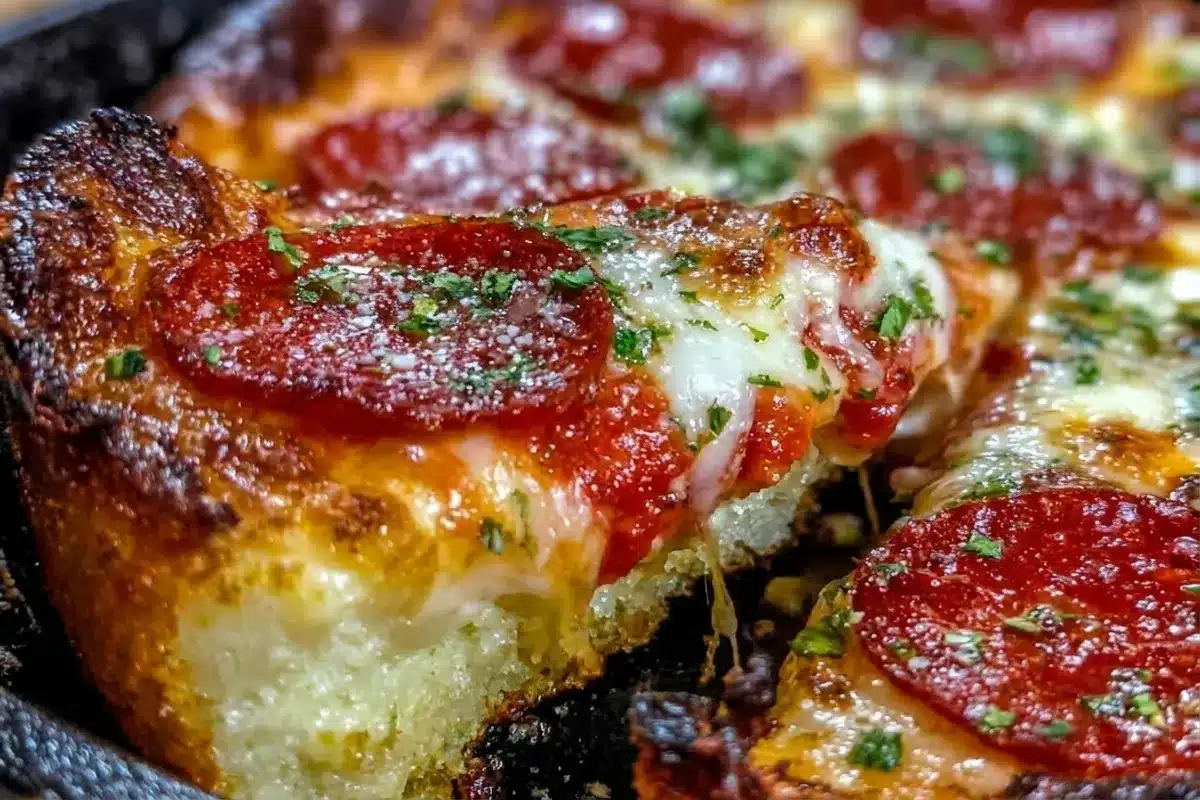
When you are craving a cozy Friday night slice, planning a quick interactive dinner with friends, or simply searching for a comforting meal without waiting for a pizza stone to preheat for an hour, a soggy, limp crust can feel like a total disappointment. If you want a restaurant-quality pie that delivers a deeply charred, shattering bottom crust paired with a beautifully airy rim and bubbling cheese, mastering a Homemade Skillet Pizza is your ultimate kitchen victory. It bridges the gap between a high-heat Neapolitan wood-fired oven and everyday home cooking appliances.
At inasrecipes.com, we love detailing the underlying food science that transforms simple kitchen ingredients into professional-grade triumphs. The biggest disasters with a homemade pan pizza are a gummy, doughy center that fails to rise, or a top layer of cheese that turns into grease before the bottom crisps. By understanding the principles of rapid conductive thermal transfer, high-hydration gluten elasticity, and direct radiant heat melting boundaries, you can serve a flawlessly crisp, perfectly blistered pizza every single time.
HIGH PROTEIN PEPPERONI PIZZA ROLLS – Healthy High Protein Snack
Table of Contents
The Pan Science: Thermal Conductivity and Gluten Expansion
Building a perfectly crisp pizza in a skillet relies entirely on managing extreme heat transfer speeds and structural dough hydration:
- Rapid Conductive Heat Transfer: Traditional home ovens bake via air convection, which is highly inefficient and results in pale, chewy pizza dough. Cast iron boasts incredible thermal mass and high conductivity. When a high-hydration dough hits a ripping hot cast-iron pan, heat is transferred directly into the bottom of the crust via conduction. This instantly vaporizes the water inside the dough, causing rapid gas expansion (oven spring) that creates a beautiful, airy crumb structure.
- The High-Hydration Gluten Matrix: A standard low-hydration dough will feel dense and heavy in a pan. To get a light, focaccia-like chewiness, we use a dough with 65% to 70% hydration (the weight of water relative to the weight of flour). This high moisture content is crucial for steam generation, allowing the dough to puff up gracefully into large, irregular air pockets when it meets the intense, trapped heat of the skillet walls.
- Radiant Heat Cheese Blistering: The secondary challenge is ensuring the toppings cook at the exact same rate as the heavy bottom crust. Placing the skillet directly under your oven’s top broiler element switches the cooking mechanism to high-intensity radiant heat. This mimics the ambient roof heat of a brick oven, melting the fats in your mozzarella and caramelizing the natural milk sugars into perfect, golden-brown blisters in less than 3 minutes.
Recipe: Masterclass Homemade Skillet Pizza
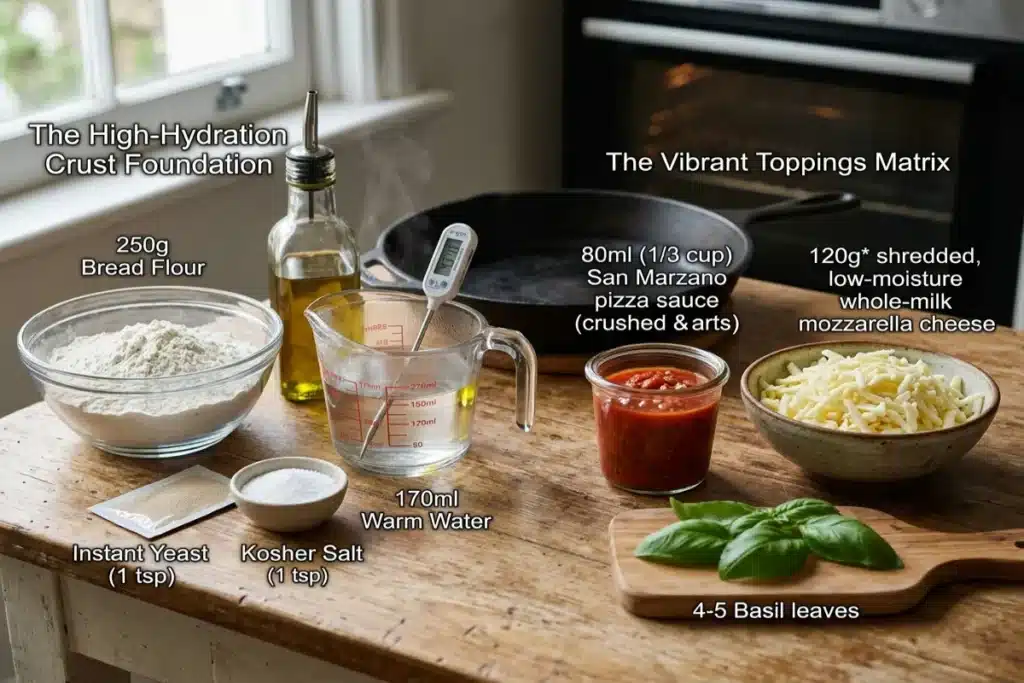
Ingredients (Yields 1 Spectacular 10-Inch Thick-Crust Pizza)
The High-Hydration Crust Foundation
- 250g bread flour (high protein content for strong gluten structure)
- 170ml warm water (approx. 43°C / 110°F)
- 1 tsp instant yeast
- 1 tsp kosher salt
- 2 tbsp premium extra virgin olive oil (for pan frying and flavor)
The Vibrant Toppings Matrix
- 80ml (1/3 cup) thick pizza sauce (crushed San Marzano tomatoes, garlic, and salt)
- 120g low-moisture, whole-milk mozzarella cheese, freshly shredded
- 4-5 fresh basil leaves (added post-bake to preserve delicate aromatics)
Instructions
1.Develop the Hydrated Gluten Matrix:15 min.
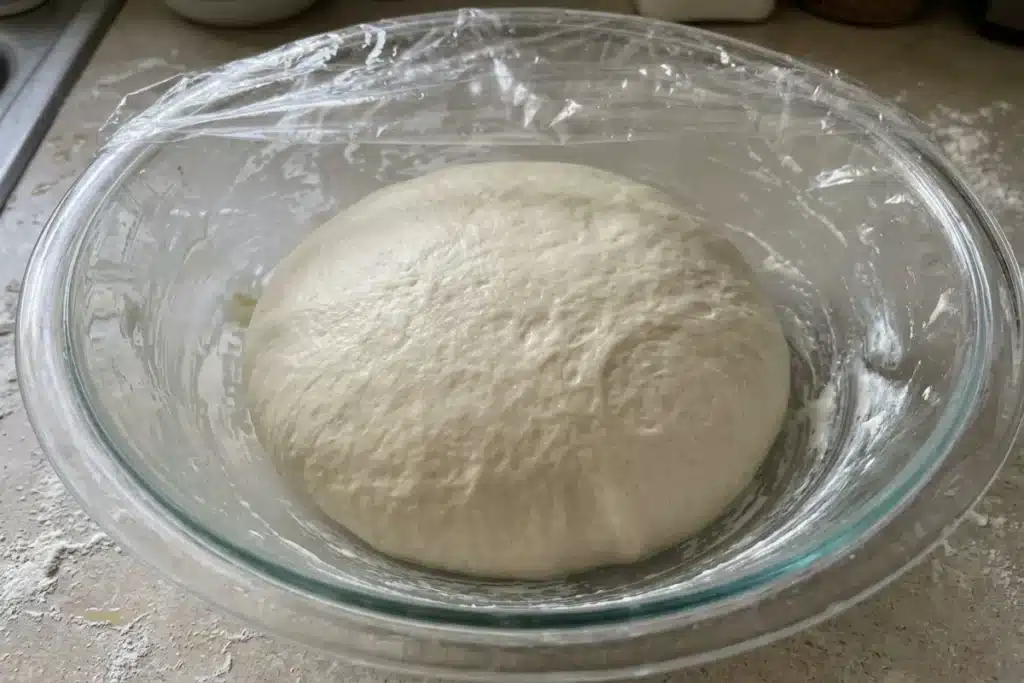
In a large bowl, whisk the bread flour, instant yeast, and salt. Pour in the warm water and stir until a shaggy dough forms. Turn the dough out onto a lightly floured surface and knead for 8 to 10 minutes until it transforms into a smooth, elastic ball. Place the dough ball in a greased bowl, cover tightly, and let it rise at room temperature for 1 hour until doubled in size.
2.Preheat the Oven and Shape in the Iron:10 min.
Preheat your oven’s broiler element to its highest setting (HIGH). Pour the 2 tablespoons of extra virgin olive oil into the bottom of a cold 10-inch cast-iron skillet. Place your risen dough ball directly in the center of the oiled pan. Use your fingertips to gently press, dimple, and stretch the dough outward until it completely fills the bottom and edges of the skillet.
3.Execute the Stovetop Bottom Sear:5 min.
Place the skillet with the dough directly onto a stovetop burner over medium-high heat. Let the dough cook undisturbed for 3 to 4 minutes. You will hear a gentle sizzle as the olive oil fries the bottom crust, and you will see large steam bubbles begin to dome across the top surface of the dough.
4.Layer and Broil for Radiant Fusion:4 min.
While the bottom pan-fries on the stove, rapidly ladle your tomato sauce over the dough, leaving a 1/2-inch border. Scatter your freshly shredded mozzarella evenly across the top, pushing it all the way to the very edges of the pan where it meets the cast iron. Transfer the entire hot skillet to the top rack of your oven under the broiler. Cook for 3 to 4 minutes until the edge crust is puffed and golden, and the cheese is bubbling and charred. Slide onto a board, top with fresh basil, and slice!
Frequently Asked Questions (FAQ)
How to make a pizza in a skillet?
To make a magnificent pizza in a skillet, you stretch a high-hydration dough into a well-oiled cast-iron pan, sear the bottom on a hot stovetop burner for 3 minutes to crisp the under-crust, add your sauce and cheese toppings, and finish the pie under the oven broiler for 4 minutes to melt and blister the cheese layer.
What pizza for diabetics?
For individuals managing diabetes, the best option is a thin-crust pizza built on a low-carbohydrate alternative crust (such as almond flour, coconut flour, or cauliflower crust) paired with zero-sugar tomato sauce, lean proteins, and high-fiber vegetable toppings. This specific architecture drastically reduces the overall glycemic load and prevents sudden blood glucose spikes.
How to make pizza for acid reflux?
To make an acid reflux-friendly pizza, you must replace the traditional acidic tomato sauce with a white base (such as olive oil, ricotta, or a light bechamel) and strictly avoid triggers like garlic, onions, pepperoni, and high-fat greasy cheeses. Emphasize easily digestible crusts, mild low-fat mozzarella, and soothing green vegetable toppings.
How to make homemade pizza with a frying pan?
Making homemade pizza with a frying pan follows the exact same stovetop-to-broiler cooking mechanism as a cast-iron skillet. Ensure you use a heavy-bottomed, oven-safe stainless steel or cast-iron frying pan that can easily withstand extreme broiler temperatures without melting its handle or warping its metal frame.
Conclusion
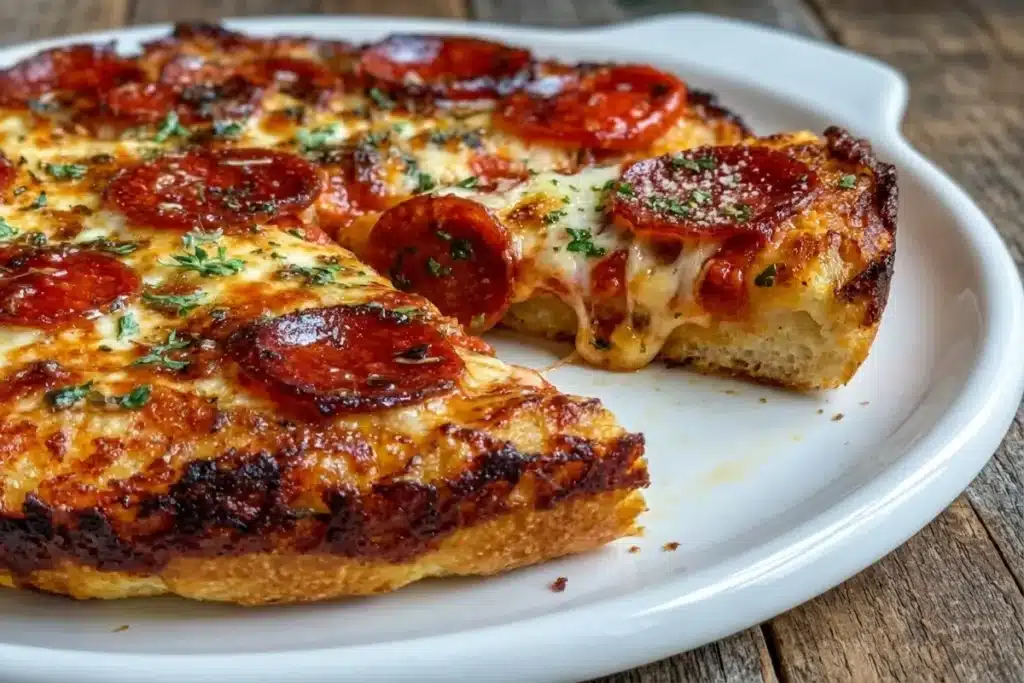
The spectacular, deeply charred, and crisp finish of our Homemade Skillet Pizza proves that world-class artisanal results are completely achievable at home when you align your steps with thermodynamic kitchen science. By utilizing the rapid conductive heat of cast iron to lock your bottom crunch and finishing under radiant broiler heat to blister your cheese, you build a magnificent, savory masterpiece that redefines pizza night.
For more small-batch dough blueprints, thermodynamic pan charts, and printable recipe scaling matrices, come join our community at inasrecipes.com!
Print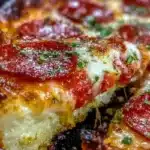
Homemade Skillet Pizza
- Total Time: 1 hour 33 minutes
- Yield: 1 (10-inch) pizza 1x
- Diet: Vegetarian
Description
A crispy, thick-crust homemade skillet pizza with a chewy interior, rich tomato sauce, gooey mozzarella, and fresh basil. This cast iron pizza delivers pizzeria-quality results right from your kitchen.
Ingredients
- 250g bread flour
- 170ml warm water
- 1 tsp instant yeast
- 1 tsp kosher salt
- 2 tbsp extra virgin olive oil
- 80ml thick pizza sauce
- 120g low-moisture whole-milk mozzarella, freshly shredded
- 4–5 fresh basil leaves
Instructions
- In a large bowl, combine the bread flour, instant yeast, and salt. Add the warm water and mix until a shaggy dough forms. Knead for 8 to 10 minutes until smooth and elastic. Place in a greased bowl, cover, and let rise for 1 hour until doubled in size.
- Preheat the oven broiler to HIGH. Pour the olive oil into a 10-inch cast iron skillet. Place the risen dough into the skillet and gently stretch it to fill the pan.
- Place the skillet over medium-high heat and cook the dough for 3 to 4 minutes until the bottom begins to crisp and bubbles form on top.
- Spread the pizza sauce evenly over the dough, leaving a small border. Top with the shredded mozzarella, extending it to the edges.
- Transfer the skillet to the oven under the broiler and cook for 3 to 4 minutes until the cheese is bubbling and golden brown.
- Remove from the oven, top with fresh basil leaves, allow to cool for a few minutes, then slice and serve.
Notes
Using bread flour creates a chewy, airy crust. Freshly shredded mozzarella melts better than pre-shredded cheese, and adding basil after baking preserves its fresh flavor and aroma.
- Prep Time: 25 minutes
- Cook Time: 8 minutes
- Category: Main Course
- Method: Skillet & Broiled
- Cuisine: Italian
Nutrition
- Serving Size: 1 slice
- Calories: 285
- Sugar: 2g
- Sodium: 420mg
- Fat: 10g
- Saturated Fat: 4g
- Unsaturated Fat: 5g
- Trans Fat: 0g
- Carbohydrates: 35g
- Fiber: 2g
- Protein: 12g
- Cholesterol: 20mg