

We’ve all been there: you’re feeling a bit “off,” and the first thing someone suggests is a cold glass of ginger ale. For generations, ginger ale for an upset stomach has been the go-to home remedy for everything from motion sickness to the common flu.
At inasrecipes.com, we love a good kitchen cure, but it’s important to distinguish between the bubbly soda we grew up with and the actual medicinal properties of the ginger root. While the fizz can feel refreshing, the real magic—or lack thereof—depends entirely on the bottle you choose.
Apple Cider Vinegar Detox Drink (Lemon & Ginger) Daily Cleanse Recipe
Table of Contents

Why Ginger Ale is the “Gold Standard” of Home Remedies
The reputation of ginger ale comes from the gingerol compounds found in the ginger root.
- The “Antiemetic” Effect: Ginger is a natural antiemetic, meaning it helps prevent vomiting and calms the digestive tract.
- The Bubbles: For some, the carbonation helps encourage a small burp, which can relieve the feeling of “fullness” or pressure in the upper stomach.
- Hydration and Glucose: When you can’t keep food down, the sugar in soda provides a quick burst of energy to prevent your blood sugar from crashing.
Ingredients
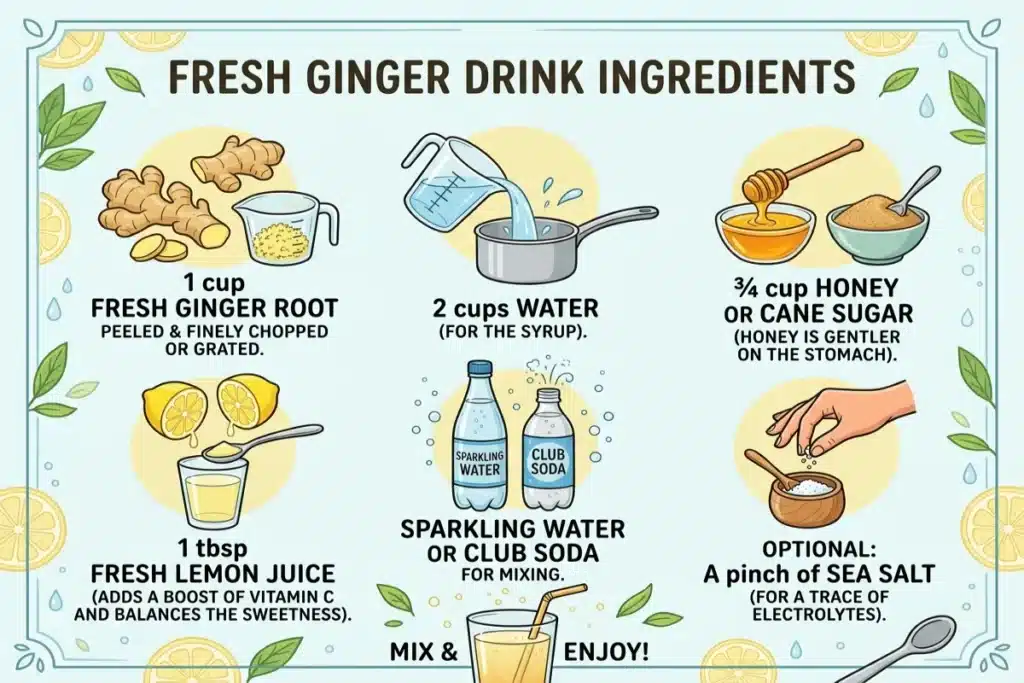
- 1 cup Fresh Ginger Root: Peeled and finely chopped or grated.
- 2 cups Water: (For the syrup).
- ¾ cup Honey or Cane Sugar: (Honey is gentler on the stomach).
- 1 tbsp Fresh Lemon Juice: Adds a boost of Vitamin C and balances the sweetness.
- Sparkling Water or Club Soda: For mixing.
- Optional: A pinch of sea salt (for a trace of electrolytes).
Instructions
1. Make the Ginger Concentrate
In a medium saucepan, combine the chopped ginger, 2 cups of water, and your sweetener (honey or sugar). Bring the mixture to a gentle boil, then reduce the heat to low.
2. Simmer for Potency
Cover the pot and let it simmer for 15–20 minutes. The longer it simmers, the “spicier” and more effective the ginger syrup will be.
3. Strain and Cool
Remove from heat and stir in the lemon juice and a tiny pinch of salt. Pour the mixture through a fine-mesh sieve into a glass jar, pressing on the ginger solids to extract every drop of liquid. Let the syrup cool completely in the refrigerator.
4. Mix Your Drink
To settle your stomach, mix 3 tablespoons of ginger syrup with 8 oz of chilled sparkling water. Stir gently to combine.
Frequently Asked Questions (FAQ)
Why is ginger ale good for stomach problems?
The primary reason ginger ale is effective for stomach problems is the presence of ginger. Historically, ginger has been used to speed up “gastric emptying”—the process of moving food from the stomach into the small intestine. This prevents food from sitting too long and causing nausea. However, most modern, mass-produced ginger ales contain very little real ginger; often, the “soothing” effect is a combination of the placebo effect, the hydration from the water, and the calming nature of the carbonation.
Does ginger ale have electrolytes?
Standard commercial ginger ale does not contain significant electrolytes. Unlike sports drinks or pediatric rehydration solutions, ginger ale lacks the necessary levels of sodium, potassium, and magnesium required to replace what is lost during a bout of vomiting or diarrhea. If you are using ginger ale for recovery, it is best to pair it with a pinch of salt or an electrolyte powder to ensure proper hydration.
Why do hospitals give you ginger ale?
Hospitals often provide ginger ale because it is a clear liquid that is generally well-tolerated by the stomach. It provides calories (sugar) that are easily absorbed without requiring the digestive system to work hard. It’s also a “palatable” way to keep patients hydrated, especially children or those recovering from anesthesia who might find plain water unappealing.
When should you not drink ginger ale?
You should avoid ginger ale if your upset stomach is accompanied by severe bloating or gas, as carbonation can make these symptoms worse. Additionally, if you are a diabetic, the high sugar content can cause a dangerous spike in glucose. Finally, if you are experiencing acid reflux or GERD, the bubbles and sugar can relax the esophageal sphincter, allowing more acid to travel upward and increasing the burning sensation.

How to Choose the “Right” Ginger Ale
If you’re reaching for a bottle to settle your stomach, look for these three things:
- Real Ginger: Check the label for “ginger root” or “natural ginger extract.” If it just says “natural flavors,” it may not have enough ginger to be medicinal.
- Reduced Sugar: High fructose corn syrup can actually irritate a sensitive gut. A ginger ale made with cane sugar or a “low sugar” version is often better.
- Flat is Fine: If the bubbles are making you feel bloated, stir the soda with a spoon for a minute to release some of the carbonation before drinking.
Conclusion
While ginger ale for an upset stomach isn’t a miracle cure, it remains a comforting and often effective way to manage mild nausea. For the best results, look for high-quality brands with real ginger bits at the bottom, or better yet, try brewing a fresh ginger tea at home.
For more wellness tips and digestive-friendly recipes, visit us at inasrecipes.com!
Print
Ginger Ale for Upset Stomach: Does It Really Work?
- Total Time: 30 minutes
- Yield: 2 cups syrup 1x
- Diet: Vegan
Description
A soothing and refreshing homemade ginger syrup blended with lemon and sparkling water, perfect for digestion and a natural fizzy drink.
Ingredients
- 1 cup fresh ginger root
- 2 cups water
- 3/4 cup honey or cane sugar
- 1 tbsp lemon juice
- Sparkling water
- Sea salt (optional)
Instructions
- Combine ginger, water, and sweetener in a saucepan.
- Bring to a boil then reduce heat.
- Simmer covered for 15–20 minutes.
- Remove from heat and add lemon juice and salt.
- Strain into a jar and cool.
- Mix 3 tbsp syrup with sparkling water.
- Stir gently and serve chilled.
Notes
Longer simmering produces a stronger, spicier ginger flavor and more potent syrup.
- Prep Time: 10 minutes
- Cook Time: 20 minutes
- Category: Beverage
- Method: Simmering
- Cuisine: Natural
Nutrition
- Serving Size: 3 tbsp syrup
- Calories: 90
- Sugar: 20g
- Sodium: 10mg
- Fat: 0g
- Saturated Fat: 0g
- Unsaturated Fat: 0g
- Trans Fat: 0g
- Carbohydrates: 22g
- Fiber: 0g
- Protein: 0g
- Cholesterol: 0mg