
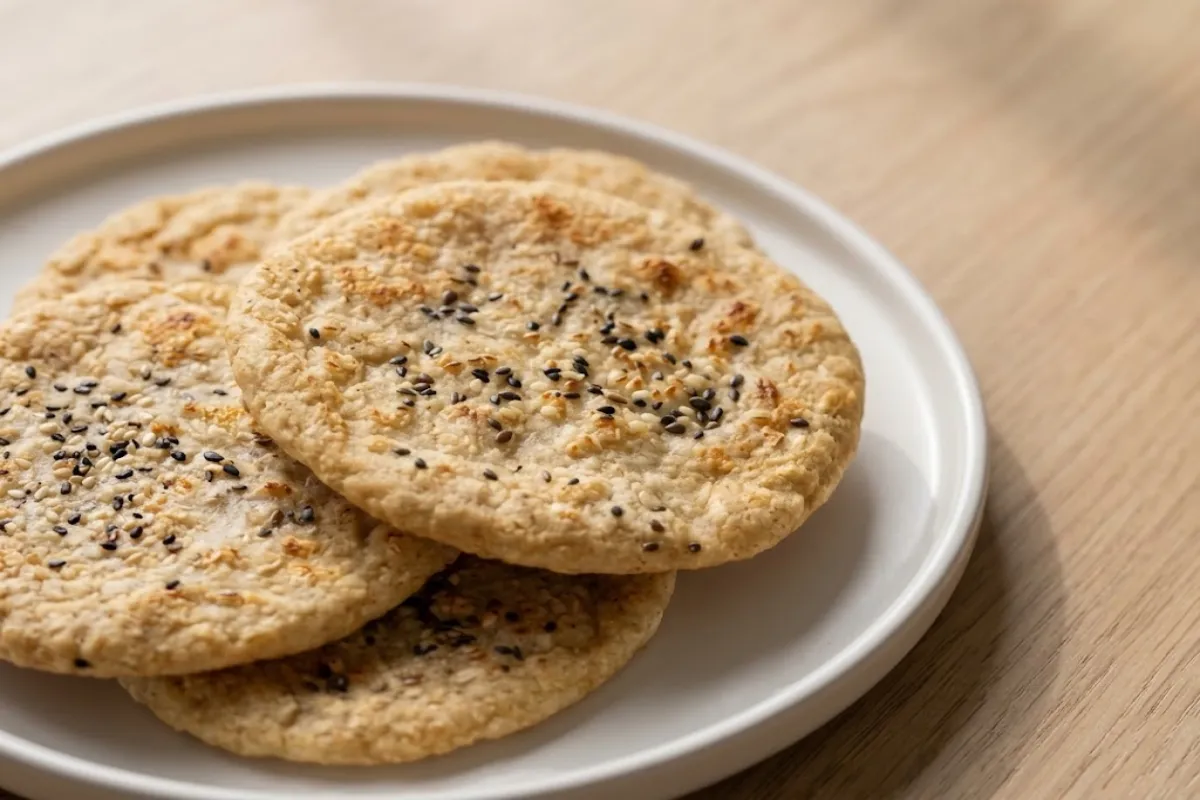
These homemade oat flatbreads are soft, flexible, and beautifully golden, made with just rolled oats, warm water, and salt! No wheat flour, yeast, added sugar, or oven required. Cooked in a nonstick skillet, they’re perfect for breakfast wraps, sandwiches, or serving alongside your favorite savory dishes.
Buttery Brown Sugar Cinnamon Cookies – Soft, Chewy & Caramelized
Table des matières
The Science Behind 3-Ingredient Oat Flatbreads
- Soluble Beta-Glucan Hydration & Viscous Network: High-speed blending of rolled oats with warm water pulverizes the bran and endosperm, releasing soluble beta-glucan mucilage fibers. Resting the mixture for 15 minutes allows beta-glucan and starch molecules to absorb water and swell, forming a thick, pourable hydrogel network that binds the batter cleanly without gluten.
- Thermal Starch Gelatinization & Vapor Expansion: When cooked over medium heat (approx. 320°F–350°F / 160°C–175°C), water trapped within the oat starch matrix rapidly reaches its boiling point. The resulting steam expands the gelatinized oat starches, setting the interior into a pliable, tender sheet rather than a brittle cracker.
- Non-Enzymatic Maillard Browning without Added Fats: Direct conductive contact between the oat proteins (avenin) and natural complex carbohydrates against a dry, preheated nonstick pan triggers Maillard browning. Cooking oil-free prevents surface boiling, ensuring a uniform golden crust while preserving maximum structural flexibility.
| Prep Time | Rest Time | Cook Time | Yield | Category |
| 5 mins | 15 mins | 10–15 mins per batch | ~4–6 flatbreads | No-Bake / Flourless & Gluten-Free Breads |
Ingredients
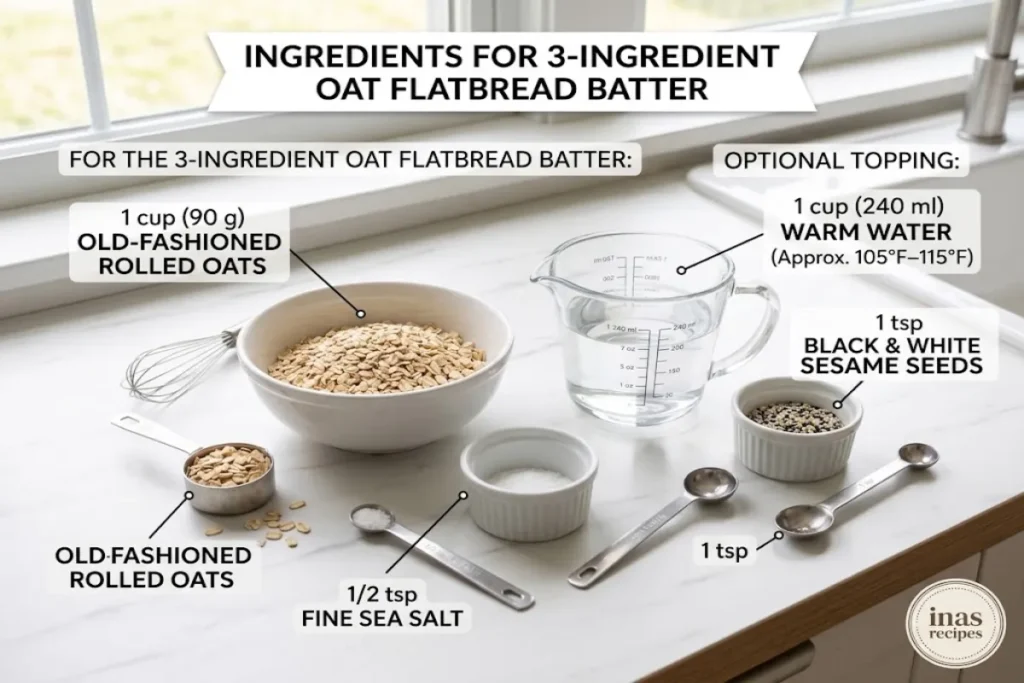
For the 3-Ingredient Oat Flatbread Batter:
- 1 cup (90 g) old-fashioned rolled oats
- 1 cup (240 ml) warm water (approx. 105°F–115°F / 40°C–45°C)
- 1/2 tsp fine sea salt
Optional Topping:
- 1 tsp black and white sesame seeds (for sprinkling)
Step-by-Step Instructions
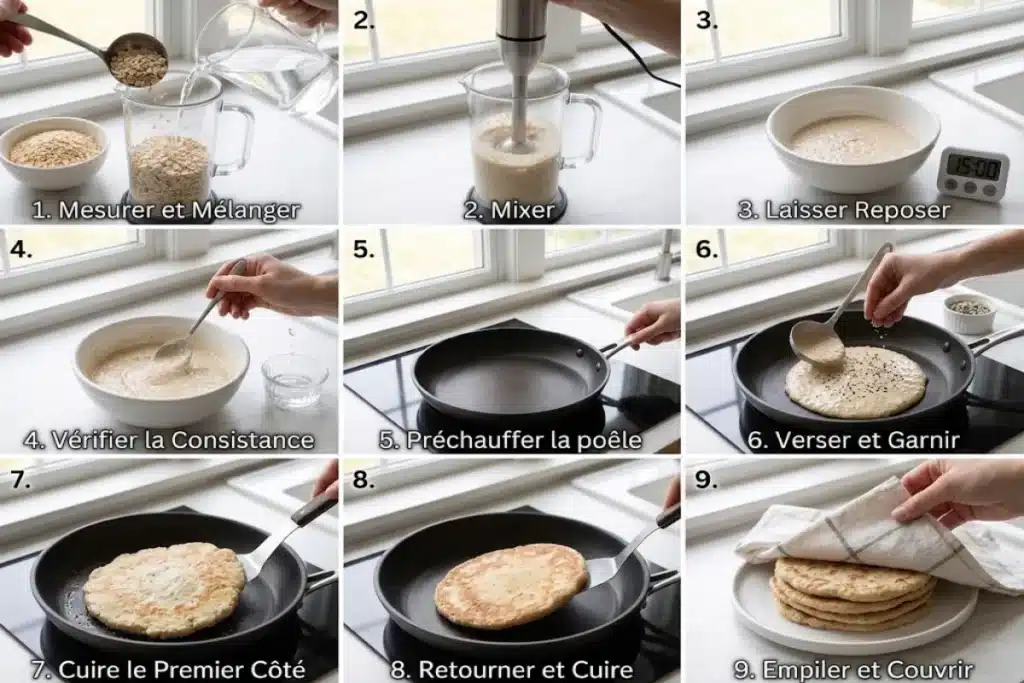
1.Measure Oats:Add 1 cup old-fashioned rolled oats to a tall blender cup.
Add 1 cup of old-fashioned rolled oats to a high-speed blender, immersion blender cup, or food processor.
2.Add Water and Salt:Pour 1 cup warm water and add 1/2 tsp fine sea salt.
Pour 1 cup of warm water and 1/2 teaspoon of salt directly over the dry oats in the blender.
3.Blend Until Smooth:Blend 45 to 60 seconds until smooth, creamy, and free of oat chunks.
Blend on high speed with an immersion blender or standard blender for 45–60 seconds until the oat batter is completely smooth, creamy, and free of large oat fragments.
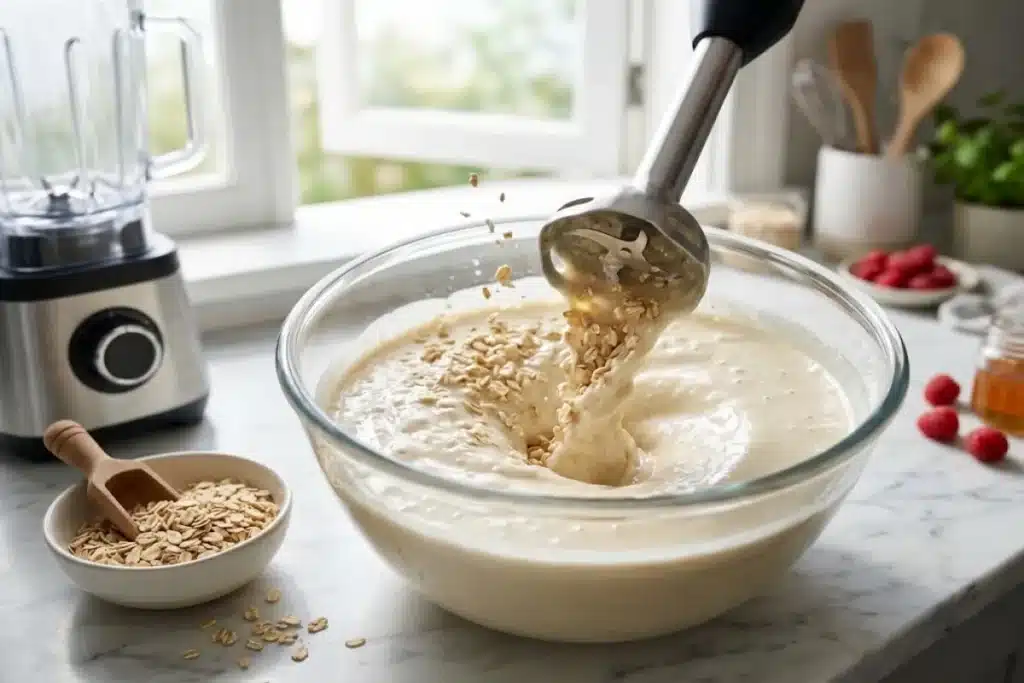
4.Rest the Oat Batter:Let oat batter sit at room temperature for 15 minutes to thicken.
Allow the oat mixture to rest undisturbed at room temperature for 15 minutes. This allows beta-glucan fibers to absorb water and form a cohesive, pourable batter.
5.Check Batter Consistency:Stir gently; add 1 tbsp warm water if batter is overly thick.
Stir the rested batter gently with a spoon. It should resemble thick but pourable pancake batter. If it appears too thick, whisk in a small splash (1 tablespoon) of warm water.
6.Preheat Nonstick Skillet:Heat a reliable nonstick skillet over medium heat without oil.
Place a quality nonstick skillet over medium heat and let it warm thoroughly for 2–3 minutes. No oil or cooking spray is necessary if using a good nonstick pan.
7.Pour Batter and Garnish:Spoon batter into pan, spread into a round, and add sesame seeds.
Spoon a ladleful of batter into the warm skillet and gently spread it outward into a 5-inch round disc. While the surface is wet, sprinkle black and white sesame seeds on top.
8.Cook First Side:Cook 2 to 3 minutes until edges dry and bottom shows golden spots.
Cook undisturbed for 2–3 minutes until the outer edges look dry, the top surface begins to set, and the underside develops light golden browning.
9.Flip and Finish Cooking:Flip carefully with a thin spatula and press gently.
Slide a thin spatula underneath the flatbread, gently flip it over, and cook for another 1–2 minutes, pressing down lightly to ensure uniform contact until set.
10.Cool under Towel to Soften:Stack warm flatbreads under a clean kitchen towel.
Transfer cooked flatbreads to a plate or rack. Immediately cover or stack them under a clean kitchen towel; trapped steam keeps the flatbreads soft and pliable!
Pro Tips for Cooking Success
- Use Warm, Not Hot or Cold, Water: Warm water accelerates oat fiber hydration without premature starch thermal gelation, resulting in a smoother, more cohesive batter.
- Never Skip the 15-Minute Rest: Skipping the rest time leaves the oats unhydrated, causing the flatbreads to crack or tear when flipped in the skillet.
- Steam Stack Under a Towel: To keep flatbreads ultra-pliable for wraps, stack each freshly cooked flatbread on top of the last under a clean kitchen towel to lock in steam.
Frequently Asked Questions
What are the 3 ingredients?
These flatbreads require only rolled oats, warm water, and salt. (Optional sesame seeds can be added for texture and flavor).
Do I need a blender?
Yes. A blender or immersion blender is essential to pulverize the whole oats and rupture cell walls, creating a uniform, viscous paste capable of setting into a flatbread without flour or gluten.
Do I need oil in the pan?
No. Using a good-quality nonstick skillet allows the oat flatbreads to cook completely dry, producing a soft, ungreasy wrap with clean golden browning.
Are these flatbreads gluten-free?
Oats are naturally gluten-free. However, to guarantee 100% gluten-free flatbreads for individuals with celiac disease or gluten sensitivity, ensure you purchase certified gluten-free rolled oats to prevent cross-contamination during milling.
Imprimer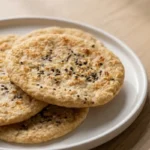
Soft Oat Flatbreads (3 Ingredients, No Flour or Yeast)
- Durée totale: 40 minutes
- Produit: 4 small flatbreads 1x
- Régime alimentaire: Végétalien
Description
This 3-Ingredient Oat Flatbread is wonderfully soft, naturally wholesome, and incredibly easy to make! Prepared with just old-fashioned rolled oats, warm water, and a pinch of fine sea salt, these homemade skillet flatbreads offer a deliciously tender texture without traditional flour, yeast, eggs, dairy, or added oil. Blending the oats creates a smooth, creamy batter that thickens naturally as it rests, producing flexible, lightly golden flatbreads that are perfect for wraps, sandwiches, breakfast, or serving alongside your favorite savory dishes. An optional sprinkle of black and white sesame seeds adds a beautiful finishing touch and a subtle nutty flavor. Cooked in a nonstick skillet in just minutes, these easy oat flatbreads are ideal for quick lunches, wholesome breakfasts, meal preparation, or enjoying with your favorite dips and spreads. Their simple ingredients, naturally vegan preparation, and soft, pliable texture make them a wonderfully versatile homemade bread alternative!
Ingrédients
- For the 3-Ingredient Oat Flatbread Batter:
- 1 cup (90 g) old-fashioned rolled oats
- 1 cup (240 ml) warm water, approximately 105°F–115°F (40°C–45°C)
- 1/2 tsp fine sea salt
- For the Optional Topping:
- 1 tsp black and white sesame seeds, for sprinkling
Instructions
- Measure the Old-Fashioned Rolled Oats: Measure 1 cup (90 g) of old-fashioned rolled oats and transfer them to a high-speed blender, a tall immersion blender cup, or a food processor. Make sure the blending container is large enough to accommodate the oats and water without overflowing.
- Add the Warm Water and Fine Sea Salt: Pour 1 cup (240 ml) of warm water, approximately 105°F–115°F (40°C–45°C), directly over the rolled oats in the blender. Add 1/2 teaspoon of fine sea salt. The water should feel comfortably warm rather than hot, helping the oats hydrate evenly and blend into a smooth batter.
- Blend Until the Oat Batter Is Completely Smooth: Blend the oats, warm water, and salt on high speed for approximately 45–60 seconds, using a high-speed blender, immersion blender, or food processor. Continue blending until the mixture becomes smooth, creamy, and uniform, with no large oat fragments remaining. Scrape down the sides of the blending container if necessary to incorporate any oats that have not been fully blended. The finished mixture should resemble a thick, smooth pancake batter.
- Rest the Oat Batter for 15 Minutes: Transfer the blended oat mixture to a bowl if desired, then allow it to rest undisturbed at room temperature for 15 minutes. During this important resting period, the soluble fibers in the oats absorb water and gradually thicken the mixture. This hydration process creates a more cohesive, flexible batter that is easier to cook and less likely to crack or tear when the flatbreads are flipped.
- Check and Adjust the Batter Consistency: After the 15-minute resting period, gently stir the oat batter with a spoon or whisk. The mixture should be thick and creamy but still pourable, similar to a thick pancake batter. If it has become too firm or difficult to spread, add a small splash of warm water, approximately 1 tablespoon, and stir until the desired consistency is reached. Avoid making the batter excessively thin, as it needs enough body to form cohesive flatbreads in the skillet.
- Preheat a Nonstick Skillet Without Oil: Place a high-quality nonstick skillet over medium heat and allow it to preheat thoroughly for approximately 2–3 minutes. A properly heated pan helps the flatbread cook evenly and release cleanly when flipped. No oil or cooking spray is necessary when using a reliable nonstick skillet.
- Pour, Spread, and Garnish the Oat Flatbread: Spoon a ladleful of the rested oat batter into the center of the warm nonstick skillet. Using the back of the ladle or a spoon, gently spread the batter outward into an even, round disc approximately 5 inches in diameter. Keep the thickness relatively uniform so the flatbread cooks evenly. If using the optional topping, sprinkle a little of the 1 teaspoon of black and white sesame seeds over the exposed surface while the batter is still wet so the seeds adhere securely.
- Cook the First Side Until Set and Lightly Golden: Allow the oat flatbread to cook undisturbed over medium heat for approximately 2–3 minutes. Watch for the outer edges to become visibly dry and slightly firm while the upper surface begins to set. The underside should develop a few light golden spots, indicating that the flatbread has formed enough structure to flip without tearing. Avoid moving it too early, as the soft batter needs sufficient time to firm up.
- Flip and Finish Cooking the Second Side: Carefully slide a thin spatula underneath the flatbread, supporting as much of its surface as possible. Gently turn it over and continue cooking for another 1–2 minutes. Press down lightly with the spatula to ensure even contact with the skillet and promote uniform cooking. The finished flatbread should be cooked through, lightly golden in spots, and soft enough to bend without breaking. Repeat the portioning, spreading, cooking, and flipping process with the remaining batter.
- Stack Under a Clean Kitchen Towel and Serve: Transfer each freshly cooked oat flatbread to a plate or cooling rack. Immediately cover it with a clean kitchen towel, stacking the additional warm flatbreads on top as they finish cooking. The gentle steam trapped beneath the towel helps soften the surfaces and keeps the flatbreads flexible and pliable, making them ideal for rolling into wraps or folding around your favorite fillings. Serve warm as a wholesome bread alternative for breakfast, lunch, or dinner, or allow them to cool while covered for convenient make-ahead meals!
Notes
- Use Warm Water, Not Hot or Cold: For the smoothest, most cohesive oat batter, use water warmed to approximately 105°F–115°F (40°C–45°C). Warm water helps the oats hydrate efficiently without prematurely cooking the starches. Avoid boiling water, which can create an overly thick or uneven mixture, and very cold water, which may slow the hydration process.
- Never Skip the 15-Minute Batter Rest: Allow the blended oat mixture to rest undisturbed at room temperature for the full 15 minutes. The soluble fibers in rolled oats absorb water and help the batter become thicker and more cohesive. Skipping this step can produce fragile flatbreads that crack or tear when flipped.
- Stack the Warm Flatbreads Under a Kitchen Towel: Immediately place each cooked flatbread on top of the previous one and cover the stack with a clean kitchen towel. The trapped steam helps soften the flatbreads and keeps them flexible enough to fold or roll into wraps without cracking.
- Blend the Oats Until Completely Smooth: Process the rolled oats, warm water, and salt for 45–60 seconds, or until no large oat pieces remain. A smooth, creamy batter produces a more uniform texture and makes the flatbreads easier to spread and cook evenly.
- Adjust the Batter Consistency Carefully: The rested oat mixture should resemble thick but pourable pancake batter. If it becomes too thick after resting, stir in approximately 1 tablespoon of additional warm water. Add only a little at a time to avoid creating a batter that is too thin to hold its shape.
- Use a Reliable Nonstick Skillet: A good-quality nonstick pan allows these oat flatbreads to cook without added oil or cooking spray. Preheat the skillet over medium heat for 2–3 minutes before adding the batter to encourage even cooking and prevent sticking.
- Wait Until the First Side Is Set Before Flipping: Allow the flatbread to cook undisturbed for 2–3 minutes until the edges appear dry and the bottom develops light golden spots. Flipping too soon can cause the delicate oat flatbread to tear. Use a thin, flexible spatula for the gentlest handling.
- Spread the Batter into Even Rounds: Aim for approximately 5-inch discs with a consistent thickness. Evenly shaped flatbreads cook more predictably and are easier to use as wraps or small sandwich breads.
- Choose Certified Gluten-Free Oats If Needed: Rolled oats are naturally gluten-free, but they can be cross-contaminated during processing. If preparing these flatbreads for someone who avoids gluten, use certified gluten-free rolled oats and check that the remaining ingredients meet their dietary requirements.
- Add Optional Sesame Seeds While the Batter Is Wet: Sprinkle the black and white sesame seeds onto the freshly poured batter before the surface begins to set. This helps the seeds adhere to the flatbread and adds a delicate nutty flavor and an attractive homemade finish.
- Perfect for Wraps and Make-Ahead Meals: Enjoy these oat flatbreads warm with your favorite savory fillings, spreads, or dips. For later use, allow the cooked flatbreads to cool and store them in an airtight container in the refrigerator. Reheat gently in a skillet and cover briefly with a kitchen towel to help restore their soft, pliable texture.
- Temps de préparation: 5 minutes
- Temps de cuisson: 20 minutes
- Catégorie: Bread
- Méthode: Stovetop Cooking
- Cuisine: International
Nutrition
- Portion: 1 small flatbread (1/4 of recipe)
- Calories: 90
- Sucre: 0g
- Sodium: 290mg
- Graisse: 2g
- Graisse saturée: 0g
- Graisses insaturées: 2g
- Gras trans: 0g
- Glucides: 16g
- Fibres: 2g
- Protéine: 3g
- Cholestérol: 0mg