
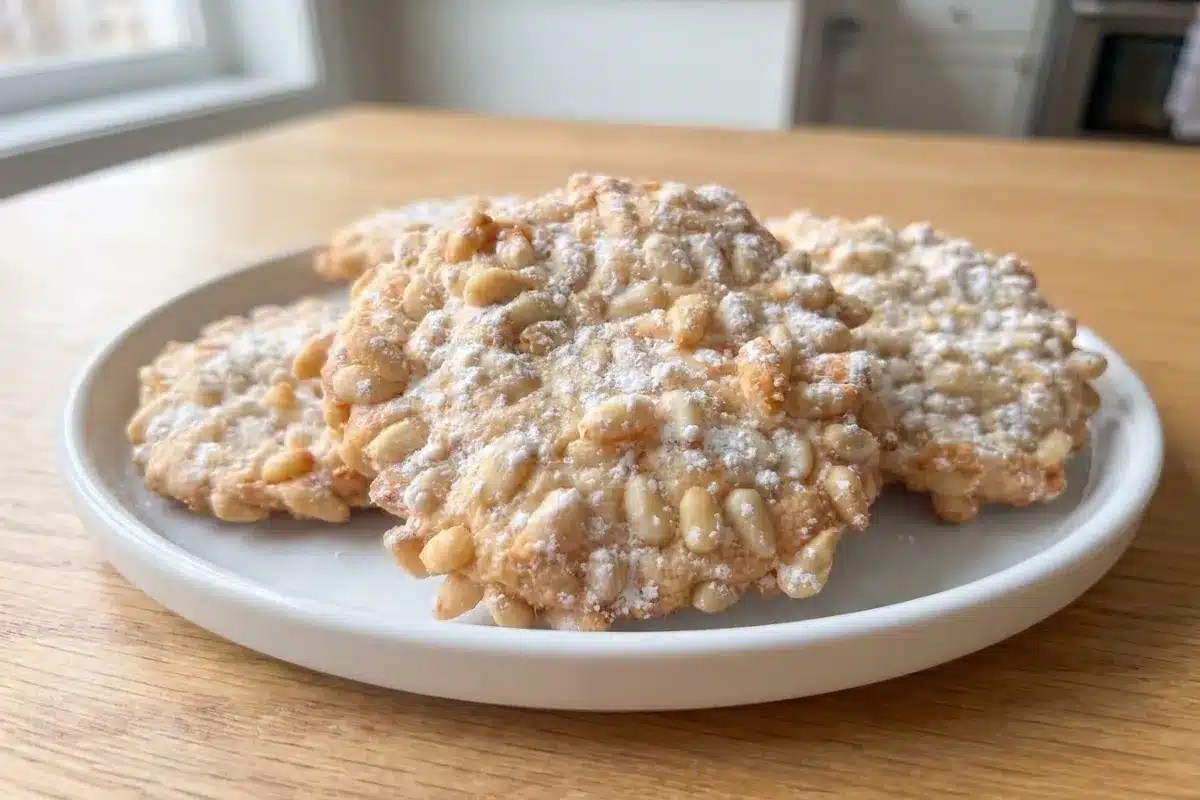
These traditional Italian Pignoli Cookies have a soft, chewy almond center and a delicate golden crust covered in crunchy pine nuts. Made with rich almond paste and just a handful of ingredients, they’re a wonderful addition to Christmas cookie trays, holiday gatherings, or an afternoon coffee break.
Orange Cranberry Ricotta Cookies (Soft, Tender & Citrus-Kissed)
Table des matières
The Science Behind Italian Pignoli Cookies
- Anhydrous Almond Paste & Gluten-Free Matrix: Authentic pignoli cookies rely on almond paste (a 1:1 ratio of crushed blanched almonds and sucrose) rather than wheat flour. Free of glutenin and gliadin proteins, the structure is formed entirely by ground nut lipids, dissolved sugars, and egg white albumens, yielding an ultra-chewy interior that naturally resists staling.
- Albumen Coagulation & Viscous Meringue Seal: A single egg white introduces ovalbumin and globulin proteins into the sugar-almond matrix. During food processing, the egg white emulsifies with nut fats; upon baking at 325°F (165°C), the proteins coagulate into a firm hydrogel network that traps moisture inside the center while setting the outer crust.
- Pinolenic Acid Pyrazine Synthesis: Pine nuts (pignoli) contain high amounts of pinolenic polyunsaturated fatty acids and amino acids. Pressing raw pine nuts onto the sticky exterior exposes them to direct radiant heat, accelerating non-enzymatic Maillard browning. This converts surface lipids and proteins into aromatic pyrazines, producing a warm, buttery, toasted-nut crunch that balances the sweet, chewy almond core.
| Prep Time | Bake Time | Total Time | Yield | Category |
| 10 mins | 16–20 mins | 30 mins | 13 cookies | Gluten-Free / Traditional Italian Pastry |
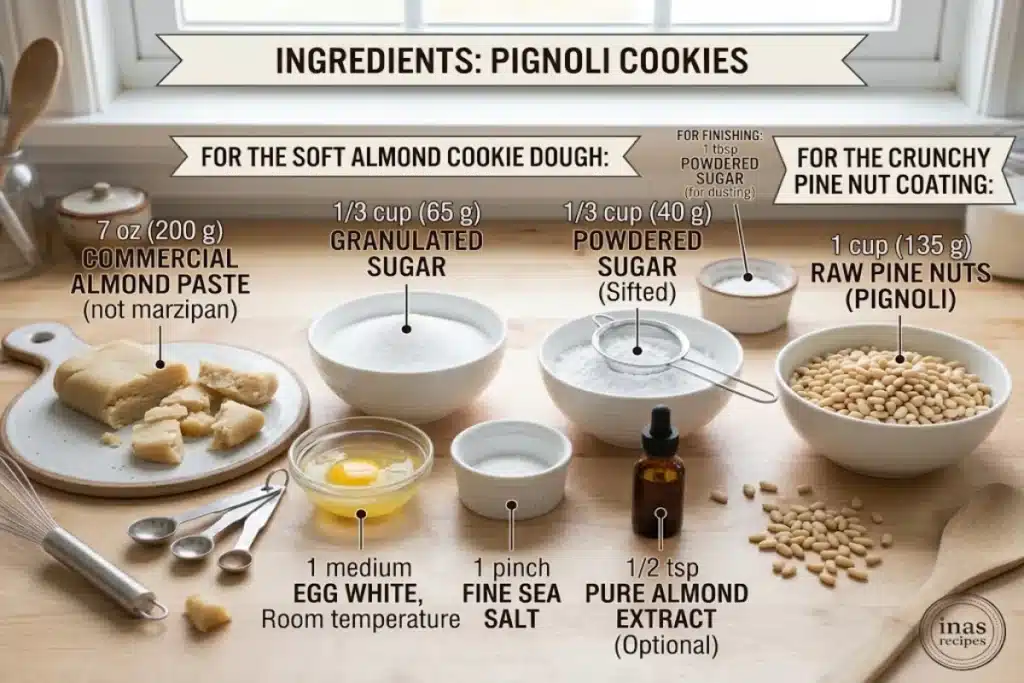
Ingredients
For the Soft Almond Cookie Dough:
- 7 oz (200 g) commercial almond paste (not marzipan), broken into small pieces
- 1/3 cup (65 g) granulated sugar
- 1/3 cup (40 g) powdered sugar (sifted)
- 1 medium egg white, room temperature
- 1 pinch fine sea salt
- 1/2 tsp pure almond extract (optional)
For the Crunchy Pine Nut Coating:
- 1 cup (135 g) raw pine nuts (pignoli)
For Finishing:
- 1 tbsp powdered sugar (for dusting, optional)
Step-by-Step Instructions
1.Preheat Oven and Prepare Sheet Pan:Line a large baking sheet and preheat oven to 325°F (165°C).
Preheat your oven to 325°F (165°C). Line a large baking sheet with parchment paper or a silicone baking mat.
2.Crumble Almond Paste:Pulse 7 oz almond paste in a food processor until crumbled.
Break 7 oz almond paste into small pieces and place them in a food processor. Pulse several times until the paste breaks down into fine, uniform crumbs.
3.Blend Sugars with Almond Paste:Add granulated sugar and powdered sugar, processing to fine crumbs.
Add 1/3 cup granulated sugar and 1/3 cup powdered sugar to the food processor. Process for 30 seconds until completely integrated into fine, slightly moist crumbs.
4.Emulsify Egg White into Dough:Add egg white, salt, and almond extract; process until sticky dough forms.
Add 1 medium egg white, a pinch of salt, and 1/2 teaspoon optional almond extract. Process continuously for 30–45 seconds until a thick, smooth, sticky almond dough forms.
5.Portion and Roll Dough Balls:Lightly dampen hands and roll dough into 1-tablespoon balls.
Lightly moisten your palms with cold water to prevent sticking. Scoop 1-tablespoon portions (~30g each) of sticky dough and roll into smooth round balls.
6.Coat with Crunchy Pine Nuts:Roll dough balls in pine nuts, pressing gently to adhere.
Place 1 cup raw pine nuts in a shallow bowl. Roll each dough ball thoroughly in the pine nuts, pressing gently so the nuts completely cover the surface.
7.Shape and Arrange Discs:Arrange on pan 2 inches apart and press into thick discs.
Place coated cookies 2 inches apart on the prepared baking sheet. Using damp fingers, gently press down on each ball to form a thick, rounded disc.
8.Bake Until Golden and Set:Bake 16 to 20 minutes at 325°F until pine nuts turn golden.
Bake at 325°F for 16–20 minutes until the edges and bottoms are lightly golden and the pine nuts are toasted. The centers should remain soft and tender.
9.Cool and Finish:Rest on sheet pan, cool on wire rack, and dust with powdered sugar.
Allow cookies to rest on the baking sheet for 5 minutes before transferring to a wire rack to cool completely. Dust lightly with powdered sugar before serving!

Pro Tips for Baking Success
- Use Pure Almond Paste (Not Marzipan): Almond paste contains roughly equal parts almonds and sugar with low moisture. Marzipan contains significantly more sugar and added egg/syrup binders, which will melt and cause cookies to spread flat.
- Keep Hands Damp While Shaping: The dough is naturally sticky due to high sugar and egg white contents. Keeping a small bowl of water nearby to lightly moisten your hands makes rolling effortless.
- Adjust Dough Firmness: If your almond paste is unusually moist and dough feels too loose to hold shape, pulse in 1 to 2 tablespoons of almond flour or let the dough chill in the refrigerator for 20 minutes before rolling.
Frequently Asked Questions
Can you freeze pignoli cookie dough?
Yes! Roll raw dough into balls and coat completely with pine nuts. Arrange on a parchment-lined tray and freeze solid for 1 hour, then transfer to a freezer-safe bag for up to 3 months. Bake directly from frozen at 325°F (165°C) for 18–22 minutes.
How long do baked pignoli cookies last?
Because almond paste retains moisture so effectively, baked pignoli cookies stay fresh, soft, and chewy when stored in an airtight container at room temperature for up to 5 days or in the refrigerator for up to 2 weeks.
What is the difference between almond paste and marzipan?
- Almond Paste: Made with coarsely ground blanched almonds and sugar in roughly equal proportions (~50% almond content). It is less sweet, coarse, and designed specifically as a baking ingredient for cookies, tarts, and pastries.
- Marzipan: Made with much finer ground almonds and a much higher proportion of sugar (~20-30% almond content), often with glucose or egg white binders. It is smooth, pliable, very sweet, and meant for rolling over cakes or molding into decorative candy shapes.
Why did my cookies spread too much or flatten?
- Used Marzipan Instead of Almond Paste: Excess sugar in marzipan liquefies under oven heat, causing cookies to pool flat.
- Egg White Was Too Large: Using an extra-large or jumbo egg white introduces excess liquid water into the paste. Stick to a small or medium egg white.
- Oven Heat Was Too Low: Ensure your oven is properly preheated to 325°F (165°C) so egg albumens set immediately upon entry.

Pignoli Cookies (Classic Italian Pine Nut Cookies)
- Durée totale: 45 minutes
- Produit: Approximately 12 cookies 1x
- Régime alimentaire: Végétarien
Description
These Italian Pignoli Cookies (Pine Nut Almond Cookies) are irresistibly soft, wonderfully chewy, and covered in a beautiful layer of golden, toasted pine nuts! Inspired by traditional Italian bakery recipes, these elegant almond cookies are made with rich almond paste, granulated sugar, powdered sugar, and egg white to create a delicate, naturally flourless dough with an intensely delicious almond flavor. Each cookie features a tender, slightly chewy center surrounded by a generous coating of crunchy pine nuts that become beautifully golden during baking. A touch of pure almond extract enhances their fragrant, nutty sweetness, while an optional dusting of powdered sugar adds a lovely finishing touch. Perfect for Christmas cookie trays, Italian holiday celebrations, family gatherings, homemade edible gifts, afternoon tea, or enjoying with a warm espresso, these classic Italian pignoli cookies are a truly irresistible homemade treat. Their beautiful golden appearance, rich almond centers, and delicate pine nut crunch make every bite taste like a traditional Italian pastry shop specialty!
Ingrédients
- For the Soft Almond Cookie Dough:
- 7 oz (200 g) commercial almond paste, not marzipan, broken into small pieces
- 1/3 cup (65 g) granulated sugar
- 1/3 cup (40 g) powdered sugar, sifted
- 1 medium egg white, room temperature
- 1 pinch fine sea salt
- 1/2 tsp pure almond extract, optional
- For the Crunchy Pine Nut Coating:
- 1 cup (135 g) raw pine nuts (pignoli)
- For the Optional Finishing Touch:
- 1 tbsp powdered sugar, for dusting the cooled cookies
Instructions
- Preheat the Oven and Prepare the Baking Sheet: Preheat your oven to 325°F (165°C) and line a large baking sheet with parchment paper or a silicone baking mat. Set the prepared sheet aside while making the soft, sticky Italian almond cookie dough. Keep a small bowl of cold water nearby for moistening your hands during shaping.
- Crumble the Almond Paste in a Food Processor: Break 7 oz (200 g) of commercial almond paste into small, evenly sized pieces and place them in the bowl of a food processor. Pulse several times until the almond paste breaks down into fine, uniform crumbs without large chunks. Make sure to use genuine almond paste rather than marzipan, as the different sugar and moisture content of marzipan can significantly affect the texture and shape of the cookies.
- Blend the Granulated and Powdered Sugars with the Almond Paste: Add 1/3 cup (65 g) of granulated sugar and 1/3 cup (40 g) of sifted powdered sugar directly to the crumbled almond paste in the food processor. Process for approximately 30 seconds, or until both sugars are thoroughly incorporated and the mixture resembles fine, slightly moist almond crumbs. Scrape down the sides of the processor if necessary to ensure an even consistency.
- Incorporate the Egg White, Salt, and Optional Almond Extract: Add 1 medium room-temperature egg white and a pinch of fine sea salt to the almond and sugar mixture. If desired, include 1/2 teaspoon of pure almond extract for an even more fragrant, pronounced almond flavor. Process continuously for approximately 30–45 seconds, or until the ingredients form a thick, smooth, cohesive, and naturally sticky almond cookie dough. The mixture should be soft and slightly tacky but able to hold its shape when portioned.
- Portion and Roll the Sticky Almond Cookie Dough: Lightly moisten your palms with cold water to prevent the almond dough from sticking excessively to your hands. Using a tablespoon or small cookie scoop, divide the prepared dough into approximately 1-tablespoon portions. Gently roll each portion between your damp palms to form a smooth, rounded ball. Keep the dough balls relatively uniform in size so the pignoli cookies bake evenly and develop consistent soft, chewy centers.
- Coat the Dough Balls Generously with Pine Nuts: Place 1 cup (135 g) of raw pine nuts, also known as pignoli, in a shallow bowl. Working with one almond dough ball at a time, gently roll it through the pine nuts until the entire surface is generously coated. Use your fingertips to press the pine nuts lightly into the sticky dough so they adhere securely without flattening the cookies. Repeat until all the dough portions are covered with a beautiful layer of raw pine nuts.
- Shape Thick Discs and Arrange on the Baking Sheet: Transfer the pine nut-coated dough balls to the prepared parchment-lined baking sheet, leaving approximately 2 inches of space between each cookie to allow for gentle spreading. Using lightly dampened fingertips, press each ball down slightly to create a thick, rounded disc. Avoid flattening the cookies too much, as they should retain enough thickness to develop their signature tender, chewy almond centers during baking.
- Bake Until the Pine Nuts Are Golden and the Centers Are Tender: Place the prepared baking sheet in the preheated oven and bake at 325°F (165°C) for approximately 16–20 minutes, or until the outer edges and undersides become lightly golden and the pine nuts are beautifully toasted. The cookies should appear set on the outside while remaining soft and tender in the center. Watch carefully toward the end of baking, as pine nuts can brown quickly. Avoid overbaking to preserve the wonderfully chewy, delicate almond texture.
- Cool Completely and Finish with Powdered Sugar: Remove the baked Italian pignoli cookies from the oven and allow them to rest on the warm baking sheet for approximately 5 minutes. This short resting period helps the delicate almond centers firm up enough to transfer without breaking. Carefully move the cookies to a wire cooling rack and allow them to cool completely to room temperature. If desired, place 1 tablespoon of powdered sugar in a fine-mesh sieve and dust the cooled cookies lightly for an elegant finishing touch. Arrange the finished Italian pine nut almond cookies on a serving platter and enjoy their golden, crunchy pine nut coating, rich almond flavor, and irresistibly soft, chewy centers alongside coffee, espresso, or tea!
Notes
- Use Genuine Almond Paste, Not Marzipan: Choose commercial almond paste specifically labeled as almond paste rather than marzipan. Almond paste typically has a higher almond content and a different sugar-to-moisture balance, making it more suitable for traditional Italian pignoli cookies. Substituting marzipan can produce a softer, sweeter dough that spreads excessively during baking.
- Keep Your Hands Lightly Damp While Shaping: The almond dough is naturally sticky because of its sugar and egg white content. Keep a small bowl of cold water nearby and lightly moisten your palms before rolling each portion. This prevents excessive sticking and makes it much easier to form smooth, rounded cookie balls without adding extra flour.
- Adjust the Dough Firmness If Necessary: If your almond paste is unusually moist and the finished cookie dough feels too loose to hold its shape, refrigerate it for approximately 20 minutes before shaping. If additional firmness is still needed, pulse in 1–2 tablespoons of almond flour until the dough becomes thick enough to portion. Avoid adding unnecessary flour or overworking the mixture.
- Process the Almond Paste into Fine Crumbs: Break the almond paste into small pieces before placing it in the food processor. Pulse until it becomes finely crumbled, then blend thoroughly with the granulated and powdered sugars. This prevents large pieces of almond paste from remaining in the dough and ensures a smooth, uniform texture.
- Sift the Powdered Sugar Before Mixing: Sift the 1/3 cup of powdered sugar before adding it to the almond paste and granulated sugar. Removing lumps helps the sugars combine evenly and creates a smooth, cohesive almond cookie dough.
- Use Room-Temperature Egg White: A room-temperature egg white blends smoothly into the almond paste and sugar mixture, helping create a uniform, sticky dough. Use only the egg white, as the recipe relies on its binding properties to form soft, chewy cookies without traditional flour.
- Coat the Cookies Generously with Raw Pine Nuts: Roll the almond dough balls thoroughly through the raw pine nuts and press the nuts gently onto their surfaces. A generous coating creates the characteristic appearance and delicious crunchy texture of traditional Italian pignoli cookies.
- Shape the Cookies into Thick Rounds: After coating the dough balls with pine nuts, press them gently into thick discs rather than flattening them completely. Maintaining some thickness helps the cookies develop soft, chewy almond centers while the exterior becomes lightly golden.
- Watch the Pine Nuts Carefully During Baking: Bake the cookies at 325°F (165°C) until the pine nuts are lightly golden and the edges appear set. Pine nuts can toast rapidly, so check the cookies closely during the final minutes to prevent excessive browning or bitterness.
- Do Not Overbake the Pignoli Cookies: Remove the cookies when the outer edges and bottoms are lightly golden while the centers still feel tender. The cookies continue to firm up during cooling, and overbaking can make them dry rather than maintaining their signature soft, chewy almond texture.
- Allow the Cookies to Cool Before Handling: Leave the freshly baked pignoli cookies on the baking sheet for approximately 5 minutes before transferring them to a wire cooling rack. Their delicate centers are fragile while hot and become more stable as they cool.
- Dust with Powdered Sugar Only After Cooling: If using the optional finishing sugar, wait until the cookies have cooled completely before dusting them lightly. Powdered sugar applied to warm cookies can dissolve into the surface rather than creating an elegant snowy finish.
- Perfect for Italian Holiday Cookie Trays: These beautiful pine nut almond cookies are a classic addition to Italian Christmas cookie platters, festive dessert assortments, and homemade edible gift boxes. Serve them with espresso, coffee, or tea to complement their rich almond flavor and golden pine nut crunch.
- Temps de préparation: 20 minutes
- Temps de cuisson: 20 minutes
- Catégorie: Dessert
- Méthode: Baking
- Cuisine: Italian
Nutrition
- Portion: 1 pignoli cookie
- Calories: 220
- Sucre: 16g
- Sodium: 15mg
- Graisse: 14g
- Graisse saturée: 1g
- Graisses insaturées: 12g
- Gras trans: 0g
- Glucides: 22g
- Fibres: 2g
- Protéine: 5g
- Cholestérol: 0mg