
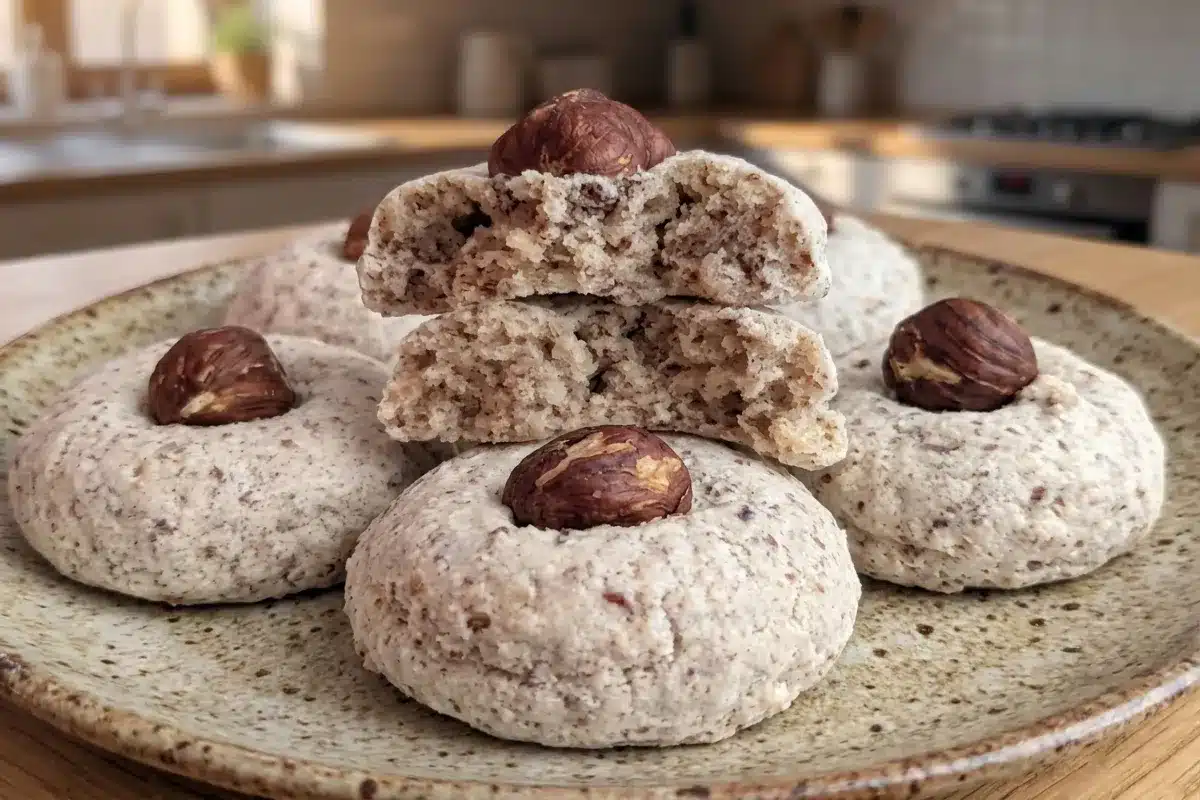
These traditional German Hazelnut Macaroons are wonderfully soft and chewy inside with a delicate, lightly crisp exterior. Made with finely ground hazelnuts, fluffy egg whites, and a hint of cinnamon, these flourless Christmas cookies are rich, nutty, and perfect for holiday cookie trays!
Sweet Ricotta Almond Shortbread Cookies (Buttery, Soft & Golden)
Table des matières
The Science Behind German Hazelnut Macaroons
- Ovalbumin-Globulin Structural Foam Denaturation: Beating room-temperature egg whites unfolds structural ovalbumin and globulin protein chains, forming an elastic physical matrix around trapped micro-air bubbles. Gradually incorporating powdered sugar increases liquid phase viscosity, stabilizing the meringue foam and preventing thermal collapse during baking.
- Hydrophobic Lipid Interface & Shear Minimization: Ground hazelnuts contain high concentrations of oleic and linoleic monounsaturated fatty acids. Free fats compete with egg proteins at the air-water interface, which can cause foam bubbles to burst. Folding ground hazelnuts into whipped meringue using a gentle circular motion minimizes shear stress, preserving airy pockets to keep the cookies tender.
- Low-Temperature Moisture Retention & Sugar Shell Crust: Baking at a gentle 300°F (150°C) slowly evaporates surface water without thermal caramelization. This sets a delicate, paper-thin sugar shell on the exterior while insulating the interior protein-nut matrix, preserving a rich, chewy center.
| Prep Time | Bake Time | Total Time | Yield | Category |
| 20 mins | 25 mins | 45 mins | ~50 cookies | Flourless / Traditional German Holiday |
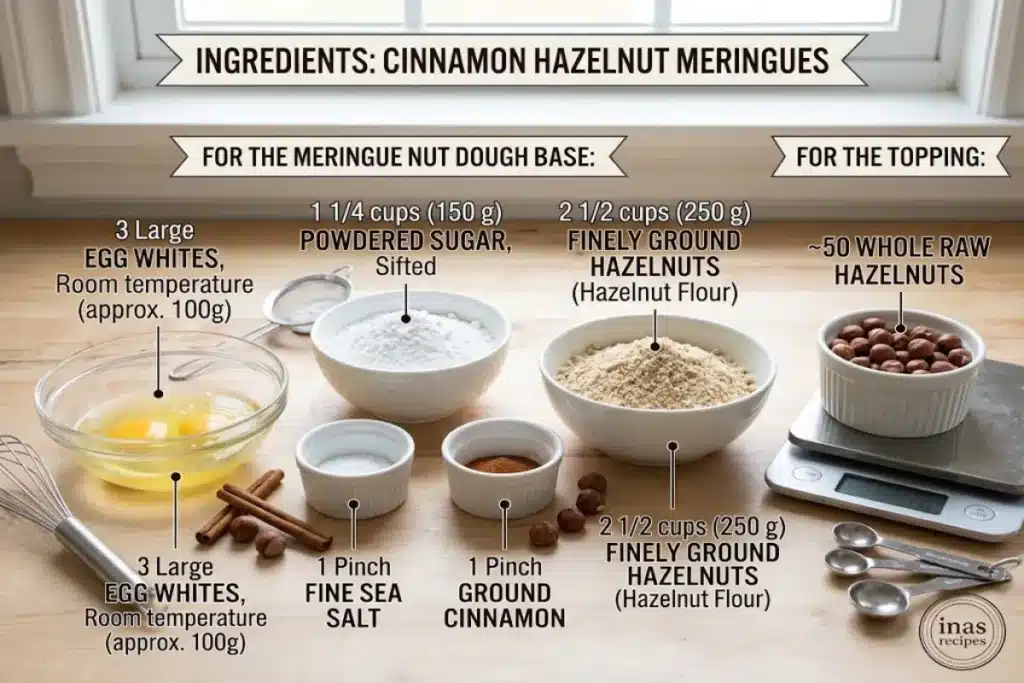
Ingredients
For the Meringue Nut Dough Base:
- 3 large egg whites, room temperature
- 1 1/4 cups (150 g) powdered sugar, sifted
- 1 pinch fine sea salt
- 1 pinch ground cinnamon
- 2 1/2 cups (250 g) finely ground hazelnuts (hazelnut flour)
For the Topping:
- ~50 whole raw hazelnuts
Step-by-Step Instructions
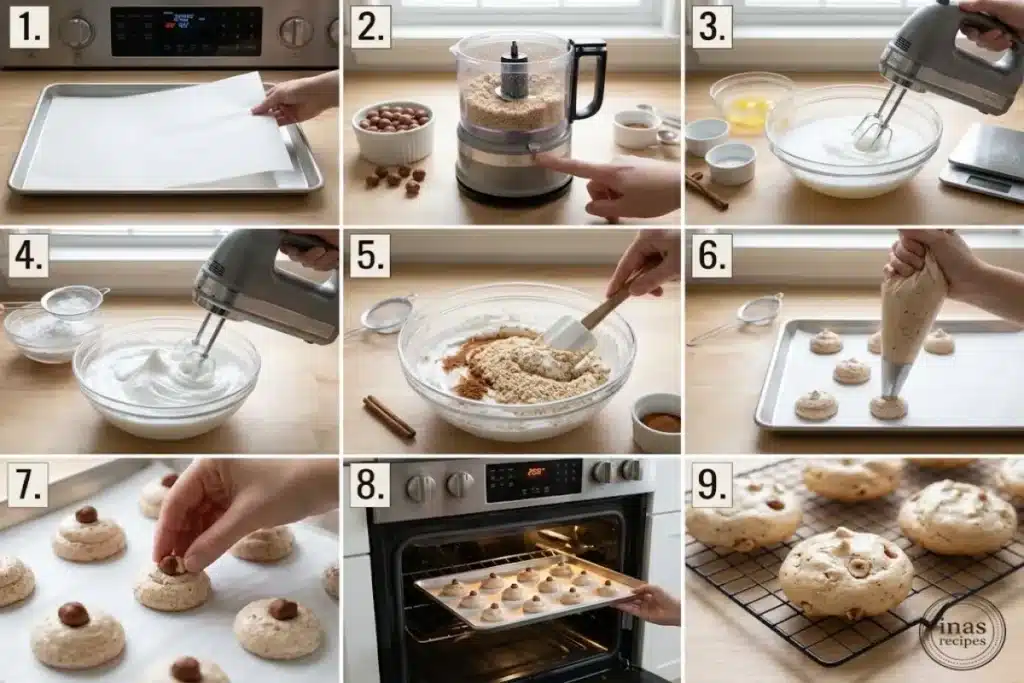
1.Preheat Oven and Prepare Sheet Pans:Preheat oven to 300°F (150°C) and line sheets.
Preheat your oven to 300°F (150°C). Line two large baking sheets with parchment paper or edible wafer paper (Oblaten).
2.Prepare Finely Ground Hazelnuts:Grind raw hazelnuts finely into coarse meal without making butter.
If using whole hazelnuts, pulse them in a food processor until finely ground into a coarse flour. Avoid overprocessing to prevent releasing nut oils that convert the meal into hazelnut butter.
3.Whip Egg Whites:Beat 3 egg whites and salt until white and foamy.
Place 3 room-temperature egg whites and 1 pinch of salt into a clean, dry mixing bowl. Beat with an electric mixer on medium speed until white and foamy.
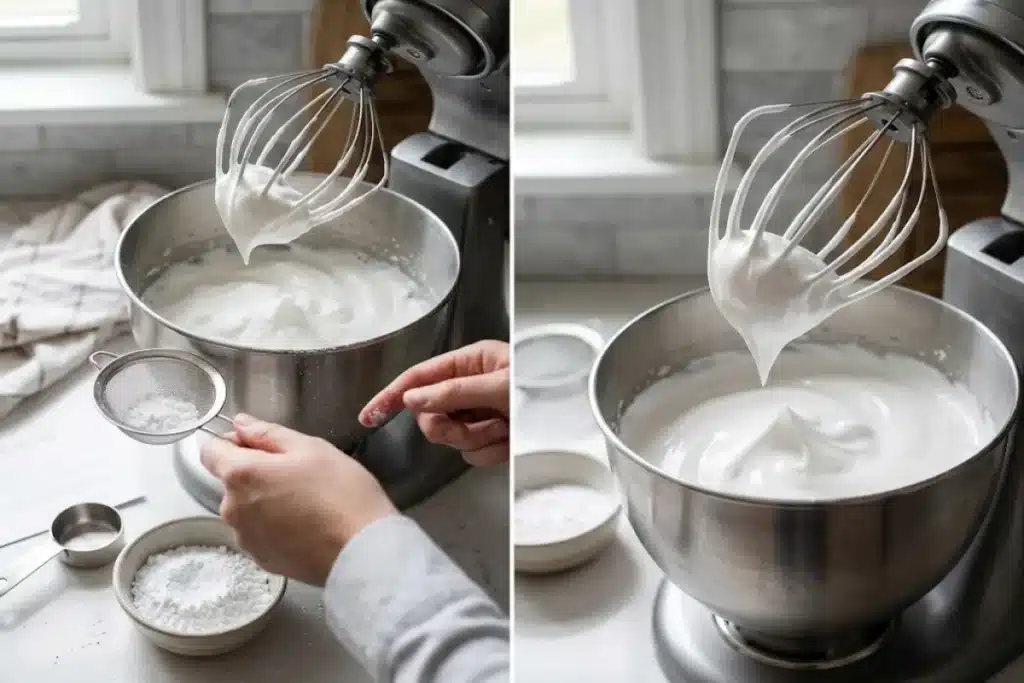
4.Incorporate Powdered Sugar:Add sifted powdered sugar gradually while beating to firm peaks.
Gradually add 1 1/4 cups sifted powdered sugar in several batches while continuing to beat. Whip on high speed until the meringue becomes thick, glossy, and holds firm, stable peaks.
5.Fold Ground Hazelnuts and Spice:Fold ground hazelnuts and cinnamon gently into meringue.
Add 2 1/2 cups finely ground hazelnuts and 1 pinch ground cinnamon to the meringue. Using a rubber spatula, fold gently just until combined into a thick, airy, slightly sticky dough.
6.Portion Cookie Mounds:Pipe or spoon small round mounds onto prepared sheets.
Transfer the hazelnut mixture to a piping bag fitted with a large round tip (or use two spoons). Pipe small, evenly sized mounds onto prepared baking sheets, leaving 1 inch of space between each.
7.Add Whole Hazelnut Topping:Gently press one whole hazelnut into center of each mound.
Gently press one whole hazelnut directly into the center top of each piped mound, taking care not to flatten the cookies.
8.Bake Until Set:Bake 23 to 25 minutes at 300°F until bottom edges set.
Bake at 300°F for 23–25 minutes until the exterior shell is set and the bottoms are lightly golden. Centers should remain soft and tender.
9.Cool and Serve:Rest 5 to 10 minutes on sheet pan, then cool on wire rack.
Remove baking sheets from the oven and let macaroons cool for 5–10 minutes before transferring them to a wire cooling rack. Enjoy completely cooled with coffee or tea!
Pro Tips for Baking Success
- Fold Meringue Gently: Always fold ground hazelnuts with a rubber spatula in light circular strokes. Over-mixing deflates trapped air bubbles, leading to dense, flat cookies.
- Avoid Over-Grinding Hazelnuts: Stop processing whole nuts as soon as they resemble a fine, light meal; releasing oil creates a paste that breaks the egg white meringue.
- Use Traditional German Oblaten: For authentic German presentation and non-stick support, pipe the dough mounds onto thin edible paper wafers (Oblaten) before baking.
Frequently Asked Questions
What does “Haselnussmakronen” mean?
- Haselnuss: The German word for hazelnut.
- Makronen: The German term for macaroons (flourless meringue-based cookies made with ground nuts or coconut).
- Translation: Haselnussmakronen translates literally to Hazelnut Macaroons.
Can I use almond flour instead of hazelnuts?
Yes! Substituting hazelnut flour with fine almond flour creates traditional German Mandelmakronen (Almond Macaroons). The ingredients, ratios, and baking instructions remain identical.
Do I need to remove the skins from the hazelnuts?
No. Traditional German Christmas recipes frequently use un-skinned ground hazelnuts (gemahlene Haselnüsse mit Haut), which give the cookies a deeper, rustic color and a rich, earthy flavor profile. Blanched skinless hazelnut flour works equally well if a lighter appearance is preferred.
Why are my macaroons sticky after cooling?
- Ambient Humidity: Meringue sugar absorbs ambient moisture quickly. Store cooled macaroons immediately in a tightly sealed tin.
- Underbaking: If the center contains excess moisture, bake for an extra 2 minutes at 300°F (150°C).
- Warm Storage: Storing warm cookies traps steam inside the container, which softens the crisp sugar shell. Allow cookies to cool 100% before sealing.

German Hazelnut Macaroons (Haselnussmakronen) – Soft & Chewy Christmas Cookies
- Durée totale: 55 minutes
- Produit: Approximately 50 small macaroons 1x
- Régime alimentaire: Végétarien
Description
These German Hazelnut Macaroons (Haselnussmakronen) are irresistibly nutty, wonderfully delicate, and beautifully chewy in the center! Inspired by traditional German Christmas baking, these classic homemade cookies are made with finely ground hazelnuts, fluffy egg white meringue, sweet powdered sugar, and a comforting hint of cinnamon. Each macaroon develops a delicate, lightly crisp exterior with a soft, tender interior and rich hazelnut flavor. A whole raw hazelnut gently pressed into the top adds a beautiful traditional finish and an irresistible nutty crunch. Made without wheat flour, butter, or dairy, these elegant hazelnut meringue cookies are perfect for Christmas cookie trays, festive Weihnachtsplätzchen assortments, holiday dessert platters, homemade edible gifts, or enjoying alongside coffee or tea. Their light texture, glossy meringue base, aromatic cinnamon, and delicious hazelnut goodness make these traditional German macaroons a wonderfully comforting holiday treat!
Ingrédients
- For the Hazelnut Meringue Dough Base:
- 3 large egg whites, room temperature
- 1 1/4 cups (150 g) powdered sugar, sifted
- 1 pinch fine sea salt
- 1 pinch ground cinnamon
- 2 1/2 cups (250 g) finely ground hazelnuts or hazelnut flour
- For the Hazelnut Topping:
- Approximately 50 whole raw hazelnuts, for pressing onto the cookies
Instructions
- Preheat the Oven and Prepare the Baking Sheets: Preheat your oven to 300°F (150°C) and line two large baking sheets with parchment paper. For a traditional German presentation, you can use thin edible wafer papers known as Oblaten instead. Arrange the edible wafers on the baking sheets before piping the macaroon mixture, ensuring each cookie has its own wafer base.
- Prepare the Finely Ground Hazelnuts: If using whole raw hazelnuts rather than prepared hazelnut flour, place the nuts in a food processor and pulse them in short bursts until they become finely ground into a light, relatively coarse flour. Measure 2 1/2 cups (250 g) of the prepared ground hazelnuts. Avoid processing the nuts continuously or too long, as excessive grinding releases their natural oils and can turn the meal into hazelnut butter. The finished hazelnut flour should remain loose and crumbly rather than oily or pasty.
- Whip the Egg Whites with Fine Sea Salt: Place 3 large room-temperature egg whites and 1 pinch of fine sea salt in a completely clean, dry, grease-free mixing bowl. Using an electric hand mixer or stand mixer fitted with the whisk attachment, beat on medium speed until the egg whites become white, foamy, and visibly increased in volume. Make sure the bowl and beaters contain no traces of grease or egg yolk, as fat can prevent a stable meringue from forming.
- Gradually Incorporate the Powdered Sugar and Whip to Firm Peaks: Gradually add 1 1/4 cups (150 g) of sifted powdered sugar to the foamy egg whites in several small batches, continuing to beat throughout the process. Increase the mixer speed to high and whip until the meringue becomes thick, smooth, glossy, and capable of holding firm, stable peaks. When the beaters are lifted, the meringue should form distinct peaks that maintain their shape without collapsing. This stable egg white structure gives the finished hazelnut macaroons their characteristic light texture.
- Gently Fold in the Ground Hazelnuts and Cinnamon: Add 2 1/2 cups (250 g) of finely ground hazelnuts and 1 pinch of ground cinnamon to the prepared glossy meringue. Using a flexible rubber spatula, gently fold the ingredients together with slow, light circular movements, lifting the mixture from the bottom of the bowl and turning it over carefully. Continue folding just until the hazelnut flour and cinnamon are evenly incorporated and the mixture forms a thick, airy, slightly sticky dough. Avoid vigorous stirring or excessive folding, as this can deflate the delicate air bubbles in the meringue and cause the macaroons to become dense or flat.
- Pipe or Spoon the Hazelnut Macaroon Mounds: Transfer the prepared hazelnut meringue mixture into a piping bag fitted with a large round piping tip. Alternatively, use two small spoons to portion the dough. Pipe or spoon approximately 50 small, evenly sized round mounds onto the prepared parchment-lined baking sheets, leaving about 1 inch of space between each cookie. If using traditional German Oblaten, pipe each mound directly onto the center of an edible wafer. Keep the portions as uniform as possible to ensure an even baking time and a consistent tender texture.
- Decorate Each Macaroon with a Whole Hazelnut: Place 1 whole raw hazelnut in the center of each unbaked macaroon mound, using approximately 50 hazelnuts in total. Press very gently so the nut adheres securely to the soft meringue mixture without flattening or spreading the mound. This classic hazelnut topping adds a beautiful traditional German appearance and a satisfying crunchy contrast to the delicate macaroon center.
- Bake Until the Exterior Is Set and the Bottoms Are Lightly Golden: Transfer the prepared baking sheets to the preheated oven and bake at 300°F (150°C) for approximately 23–25 minutes, or until the macaroon shells appear set and the bottom edges develop a delicate light golden color. The outer surfaces should feel dry and slightly firm to a gentle touch, while the centers remain soft, tender, and pleasantly chewy. Avoid overbaking, as excessive baking can dry out the macaroons and make the centers overly firm instead of delicately moist.
- Cool the Hazelnut Macaroons and Serve: Remove the baked German hazelnut macaroons from the oven and allow them to rest on their baking sheets for approximately 5–10 minutes. This cooling period helps the delicate meringue structure firm up enough for safe handling. Carefully transfer the macaroons to a wire cooling rack and allow them to cool completely to room temperature. If baked on traditional edible Oblaten wafers, leave the wafers attached to the bottoms of the cookies. Arrange the completely cooled Haselnussmakronen on a festive serving platter or Christmas cookie tray and enjoy their lightly crisp shells, wonderfully chewy hazelnut centers, delicate cinnamon aroma, and crunchy whole hazelnut topping alongside a warm cup of coffee or tea!
Notes
- Fold the Hazelnut Flour into the Meringue Very Gently: Once the egg whites have been whipped into a thick, glossy meringue, incorporate the ground hazelnuts using slow, light circular strokes with a rubber spatula. Stop folding as soon as the hazelnut flour is evenly distributed. Overmixing deflates the trapped air bubbles and can produce dense, flat macaroons instead of cookies with a delicate exterior and soft, airy center.
- Avoid Over-Grinding the Hazelnuts: If preparing your own hazelnut flour, pulse whole raw hazelnuts in short bursts and stop as soon as they resemble a fine, loose meal. Excessive processing releases the natural oils in the nuts and can transform the mixture into hazelnut butter. An oily paste can weigh down the meringue and affect the texture of the cookies.
- Use Traditional German Oblaten for an Authentic Finish: For a classic German Christmas presentation, pipe or spoon each hazelnut macaroon mound onto a thin edible paper wafer known as an Oblate. These wafers provide convenient nonstick support, help protect the delicate bottoms, and create the traditional appearance of authentic Haselnussmakronen.
- Keep the Mixing Bowl Completely Grease-Free: Make sure the bowl and mixer beaters are clean and thoroughly dry before whipping the egg whites. Even a small amount of grease or egg yolk can interfere with the formation of stable meringue peaks. A clean mixing bowl is essential for achieving a light, fluffy cookie texture.
- Use Room-Temperature Egg Whites: Allow the 3 large egg whites to reach room temperature before preparing the meringue. Room-temperature egg whites whip readily and help create the stable foam needed to support the generous amount of ground hazelnuts.
- Add the Powdered Sugar Gradually: Sift the powdered sugar before mixing and incorporate it into the foamy egg whites in several small additions. Gradual mixing helps the sugar blend evenly and produces a smooth, glossy meringue that holds firm peaks.
- Whip Until Firm and Glossy Peaks Form: Continue beating the egg whites and powdered sugar until the meringue becomes thick, shiny, and stable. When the beaters are lifted, the peaks should hold their shape. This stable foam is the foundation of the light, tender hazelnut macaroons.
- Pipe Evenly Sized Mounds: For approximately 50 small macaroons, use a piping bag fitted with a large round tip or portion the mixture carefully with two spoons. Keeping the mounds uniform ensures consistent baking and prevents smaller cookies from becoming dry before the larger ones are set.
- Press Whole Hazelnuts onto the Tops Gently: Place one whole raw hazelnut in the center of each mound before baking. Apply only enough pressure to secure the nut without flattening the airy meringue mixture. The topping adds a beautiful traditional finish and delicious crunchy texture.
- Do Not Overbake the Macaroons: Remove the cookies from the oven when their exteriors feel set and the bottom edges are lightly golden. The centers should remain soft and tender. Overbaking can dry out the macaroons and reduce their characteristic chewy texture.
- Allow the Cookies to Set Before Handling: Leave the freshly baked hazelnut macaroons on the baking sheets for 5–10 minutes before transferring them to a wire cooling rack. The delicate meringue structure becomes more stable during cooling, reducing the risk of cracking or breaking.
- Store in an Airtight Container: Once completely cooled, keep the German hazelnut macaroons in an airtight container at room temperature. Protect them from excess humidity to help preserve their delicate outer shells and wonderfully soft, chewy centers.
- Perfect for Traditional German Christmas Cookie Trays: These homemade Haselnussmakronen are a beautiful addition to festive Weihnachtsplätzchen assortments, holiday cookie boxes, and Christmas dessert platters. Serve them with freshly brewed coffee or warm tea for a comforting seasonal treat.
- Temps de préparation: 20 minutes
- Temps de cuisson: 25 minutes
- Catégorie: Dessert
- Méthode: Baking
- Cuisine: German
Nutrition
- Portion: 1 small hazelnut macaroon
- Calories: 65
- Sucre: 3g
- Sodium: 5mg
- Graisse: 4g
- Graisse saturée: 0g
- Graisses insaturées: 4g
- Gras trans: 0g
- Glucides: 6g
- Fibres: 1g
- Protéine: 1g
- Cholestérol: 0mg