
Crisp puff-pastry cookies with caramelized sugar and warm spices. Exceptionally flaky, buttery, and infused with citrus aromatics, these classic French elephant ear cookies are surprisingly simple to make!
White Chocolate Cherry Oatmeal Cookies
Table of Contents
The Science Behind Cinnamon Orange Palmiers
- Sucrose Pyrolysis & Surface Caramelization: As the sugar-coated puff pastry bakes at 400°F (204°C), thermal energy breaks down sucrose into glucose and fructose. These simple sugars melt and caramelize along the pastry surfaces, creating a glossy, crackling glass-like candy coating that seals in crispness.
- Lamination Steam Expansion: Store-bought puff pastry relies on alternating micro-layers of solid dough and butter fat. High oven heat turns moisture trapped within the dough layers into expanding steam, forcing the leaves of pastry apart while the butter fries the thin dough walls to crispy perfection.
- Citrus Flavedo Oil Diffusion: Rubbing fresh orange zest directly into granulated sugar ruptures microscopic flavedo glands, coating sucrose crystals with essential citrus oils (d-limonene). As the sugar caramelizes, these oils infuse deep warm spice notes (cinnamon, nutmeg, cardamom) without dampening the pastry layers with excess liquid.
| Prep Time | Chill Time | Bake Time | Yield | Category |
| 20 mins | 30 mins | 16–17 mins | ~36–40 cookies | Pastry / Specialty |
Ingredients
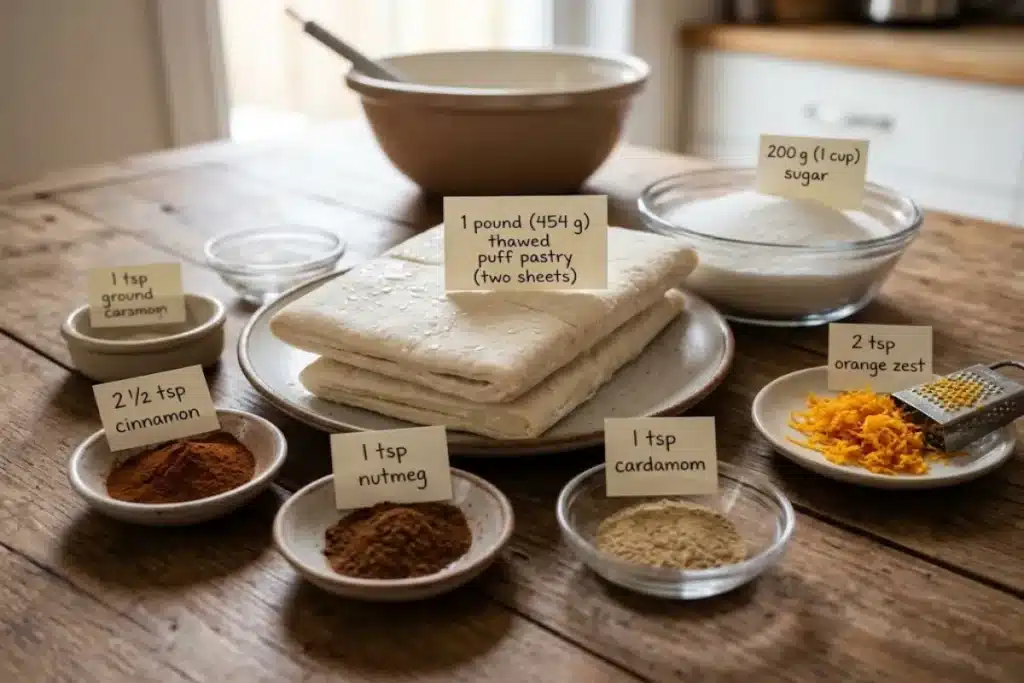
- 1 pound (454 g) puff pastry (two sheets), thawed but kept cold
- 200 g (1 cup) granulated sugar
- 2 1/2 tsp ground cinnamon
- 1 tsp ground nutmeg
- 1 tsp ground cardamom
- 2 tsp fresh orange zest

Step-by-Step Instructions
1.Prepare Spice-Sugar Mixtures:Divide into plain and citrus sugar batches.
In a bowl, whisk together the granulated sugar, ground cinnamon, ground nutmeg, and ground cardamom. Divide the mixture equally into two separate bowls. Add the fresh orange zest to one bowl and rub it into the sugar with your fingertips until fragrant.
2.Roll First Pastry Sheet:Use plain spice sugar to prevent sticking.
Dust your work surface generously with half of the plain spice-sugar mixture. Unroll one cold puff pastry sheet onto the sugar and roll it out gently into a 10-inch square, pressing the sugar into the bottom surface.
3.Add Orange Sugar and Press:Locks sugar into pastry layers.
Sprinkle half of the reserved orange-zest sugar evenly over top of the rolled pastry sheet. Gently roll a rolling pin over the surface to press the sugar firmly into the dough.
4.Roll Pastry Edges Inward:Creates iconic palm-leaf shape.
Tightly roll the left and right edges of the pastry inward toward the center until they meet in the middle, forming a double log.
5.Repeat and Chill Logs:Solidifies butter fat before slicing.
Repeat the rolling and sugar process with the second puff pastry sheet. Wrap both double-rolled logs tightly in plastic wrap and refrigerate for 30 minutes until solid.
6.Preheat Oven and Slice Pastry:Space 2 inches apart.
Preheat your oven to 400°F (204°C) and line two large baking sheets with parchment paper. Using a sharp chef’s knife, slice the chilled logs approximately 3/8-inch thick. Place slices 2 inches apart on prepared sheets.
7.Bake and Caramelize:Flip halfway through baking.
Bake at 400°F for 8–9 minutes until the bottoms caramelize. Carefully flip each palmier over with a spatula and bake for an additional 8 minutes until golden brown and caramelized. Watch closely toward the end to avoid burning the molten sugar!
8.Cool and Set:Molten sugar hardens as it cools.
Allow the palmiers to rest on the baking sheet for 5 minutes so the caramelized sugar sets, then carefully transfer them to a wire rack to cool completely.

Pro Tips for Baking Success
- Keep Pastry Cold: If puff pastry gets warm or limp while rolling, pop it back into the freezer for 5 minutes. Cold butter layers are required to create distinct, flaky pastry leaves!
- Use Parchment Paper (Not Wax or Silicone): Molten sugar caramelizes beautifully on parchment paper and releases easily. Avoid wax paper (which burns) or bare metal pans (which stick permanently).
- Watch the Bake Closely: Caramelized sugar moves from golden perfection to burnt in under a minute! Keep a close eye on the palmiers during the final 3 minutes of baking.
Frequently Asked Questions
Why is it called a Palmiers?
Palmiers (pronounced palm-YAY) are traditional French pastries named after their visual resemblance to palm leaves (palmier in French). They are also commonly called “elephant ear cookies,” “palm heart cookies,” or “butterfly glasses” due to their folded, symmetrical rolled shape.
What are the little orange fruits on Palmiers?
“Palmiers” or “Palm trees” (specifically ornamental palm species like jelly palms or date palms) produce small, bright orange drupes or fruits. When people notice small orange fruits around palm trees, they are observing palm fruit clusters! In pastry baking, “orange palmiers” simply refer to palmier pastries infused with orange zest or orange blossom aromatics.
What are some interesting facts about orange trees?
- Hybrid Origins: Sweet oranges are actually ancient cultivated hybrids of pomelos (Citrus maxima) and mandarins (Citrus reticulata).
- Evergreen Bloomers: Orange trees can simultaneously produce flowers, green unripened fruit, and ripe orange fruit on the exact same tree.
- White Flowers & Aromatics: Orange blossoms yield essential oils used extensively in perfumery and baking extracts (such as orange blossom water).
What are the orange things that fall off Palmiers?
The orange berries or fruits that drop from real palm trees (Palmiers) are the ripened seeds/fruits of palm tree species. In culinary contexts, any orange flakes or bits seen falling off baked Cinnamon Orange Palmiers are pieces of candied orange zest and caramelized orange sugar crisping off the flaky pastry edges.
Print
Cinnamon Orange Palmiers
- Total Time: 1 hour 7 minutes
- Yield: 32 palmiers 1x
- Diet: Vegetarian
Description
These Spiced Orange Palmiers are beautifully crisp, flaky, and caramelized, with warm cinnamon, nutmeg, cardamom, and bright fresh orange zest. Made with buttery puff pastry and a fragrant citrus-spice sugar coating, these elegant French cookies bake into golden, crunchy layers with their signature palm-leaf shape. Perfect for holiday baking, cookie trays, afternoon tea, or special occasions, these homemade palmiers are a delicious sweet treat.
Ingredients
- 1 pound (454 g) puff pastry (two sheets), thawed but kept cold
- 200 g (1 cup) granulated sugar
- 2 1/2 tsp ground cinnamon
- 1 tsp ground nutmeg
- 1 tsp ground cardamom
- 2 tsp fresh orange zest
Instructions
- Prepare Spice-Sugar Mixtures: In a bowl, whisk together the granulated sugar, ground cinnamon, ground nutmeg, and ground cardamom. Divide the mixture equally into two separate bowls. Add the fresh orange zest to one bowl and rub it into the sugar with your fingertips until fragrant.
- Roll First Pastry Sheet: Dust your work surface generously with half of the plain spice-sugar mixture. Unroll one cold puff pastry sheet onto the sugar and roll it out gently into a 10-inch square, pressing the sugar into the bottom surface.
- Add Orange Sugar and Press: Sprinkle half of the reserved orange-zest sugar evenly over the top of the rolled pastry sheet. Gently roll a rolling pin over the surface to press the sugar firmly into the dough.
- Roll Pastry Edges Inward: Tightly roll the left and right edges of the pastry inward toward the center until they meet in the middle, forming a double log with the classic palm-leaf shape.
- Repeat and Chill Logs: Repeat the rolling and sugar process with the second puff pastry sheet. Wrap both double-rolled logs tightly in plastic wrap and refrigerate for 30 minutes until firm.
- Preheat Oven and Slice Pastry: Preheat your oven to 400°F (204°C) and line two large baking sheets with parchment paper. Using a sharp chef’s knife, slice the chilled logs approximately 3/8-inch thick. Place the slices 2 inches apart on the prepared baking sheets.
- Bake and Caramelize: Bake at 400°F (204°C) for 8–9 minutes until the bottoms caramelize. Carefully flip each palmier over with a spatula and bake for an additional 8 minutes until golden brown and caramelized. Watch closely toward the end to avoid burning the molten sugar.
- Cool and Set: Allow the palmiers to rest on the baking sheets for 5 minutes so the caramelized sugar sets, then carefully transfer them to a wire cooling rack to cool completely.
Notes
- Keep Pastry Cold: If puff pastry gets warm or limp while rolling, place it back into the freezer for 5 minutes. Cold butter layers are essential for creating distinct, flaky pastry leaves.
- Use Parchment Paper (Not Wax or Silicone): Molten sugar caramelizes beautifully on parchment paper and releases easily. Avoid wax paper, which can burn, and bare metal pans, which can cause the palmiers to stick.
- Watch the Bake Closely: Caramelized sugar can go from perfectly golden to burnt in under a minute. Keep a close eye on the palmiers during the final 3 minutes of baking.
- Prep Time: 20 minutes
- Cook Time: 17 minutes
- Category: Dessert
- Method: Baking
- Cuisine: French
Nutrition
- Serving Size: 1 palmier
- Calories: 115
- Sugar: 6g
- Sodium: 65mg
- Fat: 6g
- Saturated Fat: 2g
- Unsaturated Fat: 4g
- Trans Fat: 0g
- Carbohydrates: 14g
- Fiber: 0.5g
- Protein: 1g
- Cholesterol: 5mg